
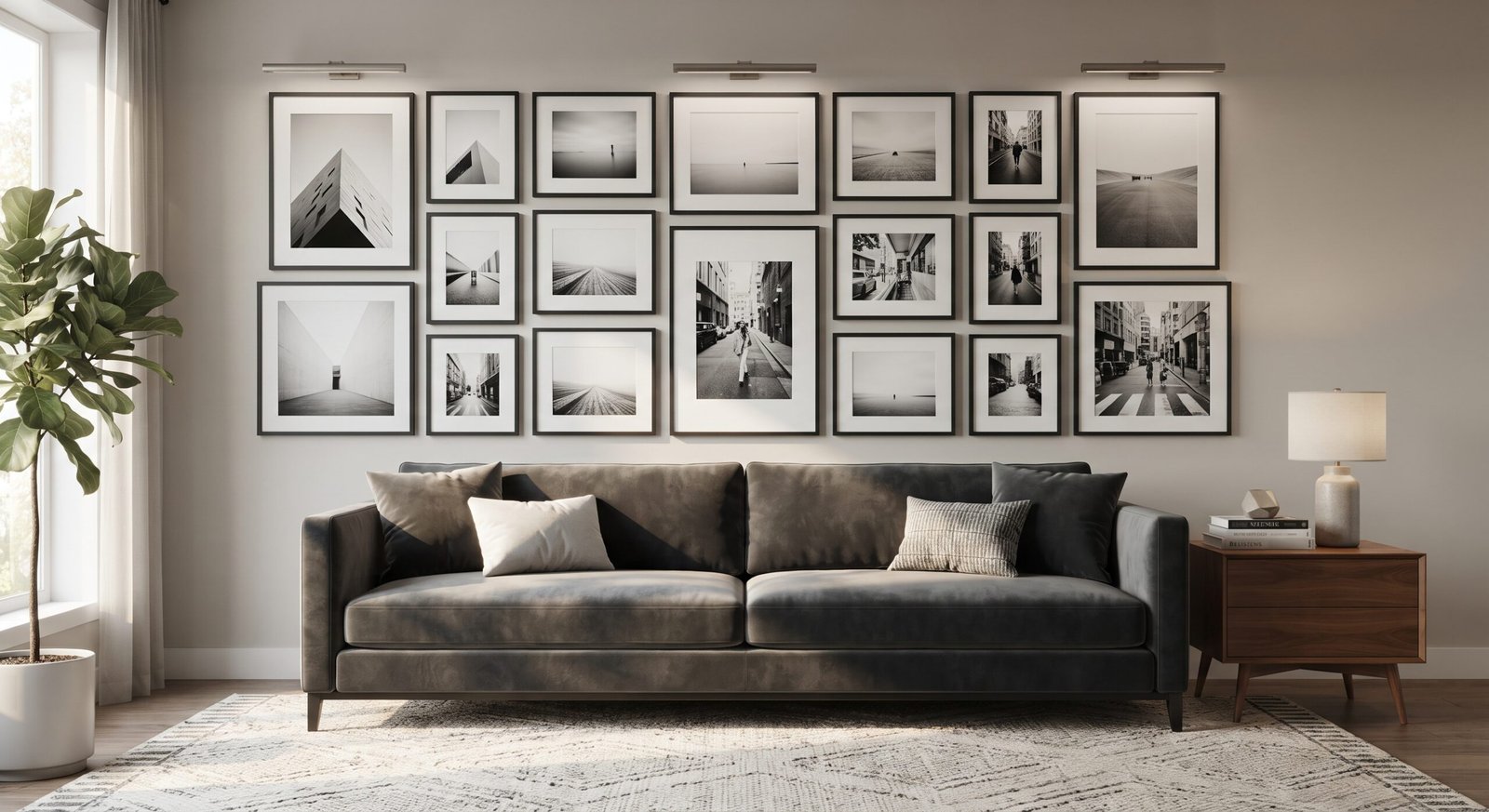
Blank walls offer incredible potential, but turning an empty surface into a captivating visual statement can feel intimidating. One of the most expressive ways to elevate your interior design is through thoughtfully curated gallery Walls. Whether you want to showcase family memories, vintage travel prints, or abstract modern art, a well-executed gallery wall adds personality, texture, and architectural interest to any room.
However, randomly hammering nails into a wall rarely yields professional results. Achieving a cohesive look requires careful planning, balance, and an understanding of scale. In this comprehensive guide, we will walk you through everything you need to know to design, layout, and install stunning gallery Walls that command attention for all the right reasons.
Key Takeaways
- Establish a Focal Point: Start with your largest piece of art and build the surrounding arrangement outward to maintain visual balance.
- Maintain Consistent Spacing: Keep gaps between frames uniform—typically between 2 to 3 inches—to ensure a clean, intentional look.
- Mix Frame Styles Wisely: Choose either uniform frames for a clean, modern aesthetic or varied vintage frames for an eclectic, bohemian vibe.
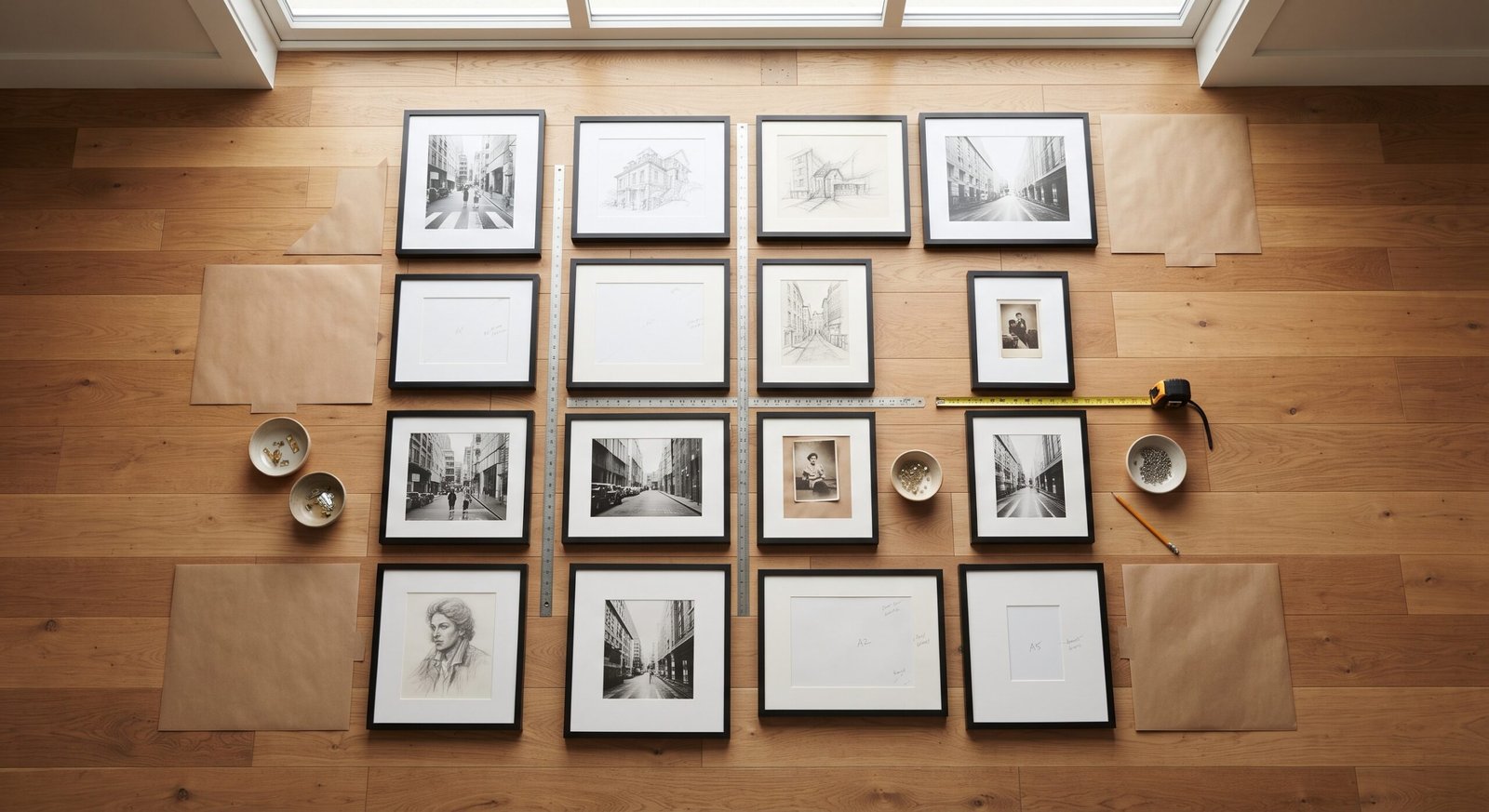
- Test Before You Nail: Use paper templates cut to the size of your frames and tape them to the wall first to test your layout.
1. Choosing Your Theme and Art Selection
Before picking up a hammer, define the narrative of your gallery Walls. A cohesive theme prevents the wall from looking cluttered or chaotic. You can group pieces by a shared color palette (such as monochrome prints or earthy tones), a specific photographic subject, or a consistent medium like watercolor paintings.
“A great gallery wall tells a story. It reflects your personal history, travels, and aesthetic taste in a single curated glance.”
2. Popular Gallery Wall Layout Styles
Selecting the right layout depends on your room’s architecture and personal style. The table below compares the most effective configuration styles for gallery Walls:
| Layout Style | Best Suited For | Visual Characteristic |
| Grid Arrangement | Modern, minimalist spaces | Clean lines, identical frame sizes, and equal spacing. |
| Symmetrical Layout | Hallways and formal living rooms | Balanced weight on both sides of a central axis point. |
| Eclectic / Organic | Staircases and eclectic living areas | Mixed frame sizes and shapes flowing naturally outward. |
| Linear / Shelf Line | Kitchens and narrow corridors | Art resting on shallow picture ledges in a straight line. |
3. Step-by-Step Hanging and Installation Techniques
Once your layout is perfected on the floor or via paper templates, it is time to bring your gallery Walls to life on the vertical canvas.
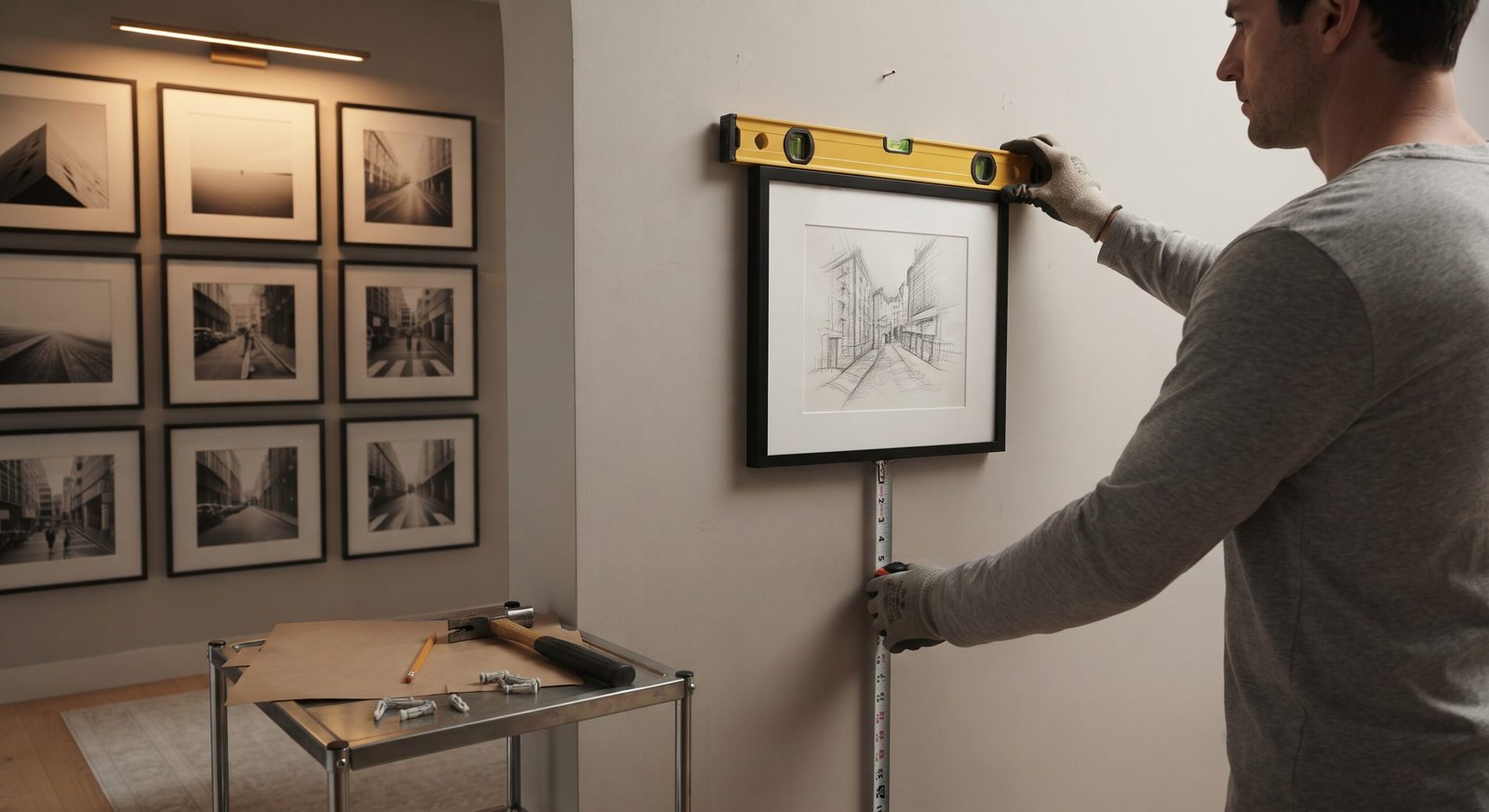
- The Paper Template Method: Trace each frame onto brown craft paper, cut out the templates, and tape them to the wall using painter’s tape. Step back to evaluate the composition.
- Measure Twice: Mark the exact spot for your hardware through the paper template before driving any nails or anchors into the wall.
- Start from the Center: For eclectic walls, hang your anchor piece first and work your way outward, measuring gaps constantly.
4. Lighting and Finishing Touches
The final element that separates amateur gallery Walls from professional interior design is lighting. Proper illumination accentuates textures, prevents glare, and draws the eye.
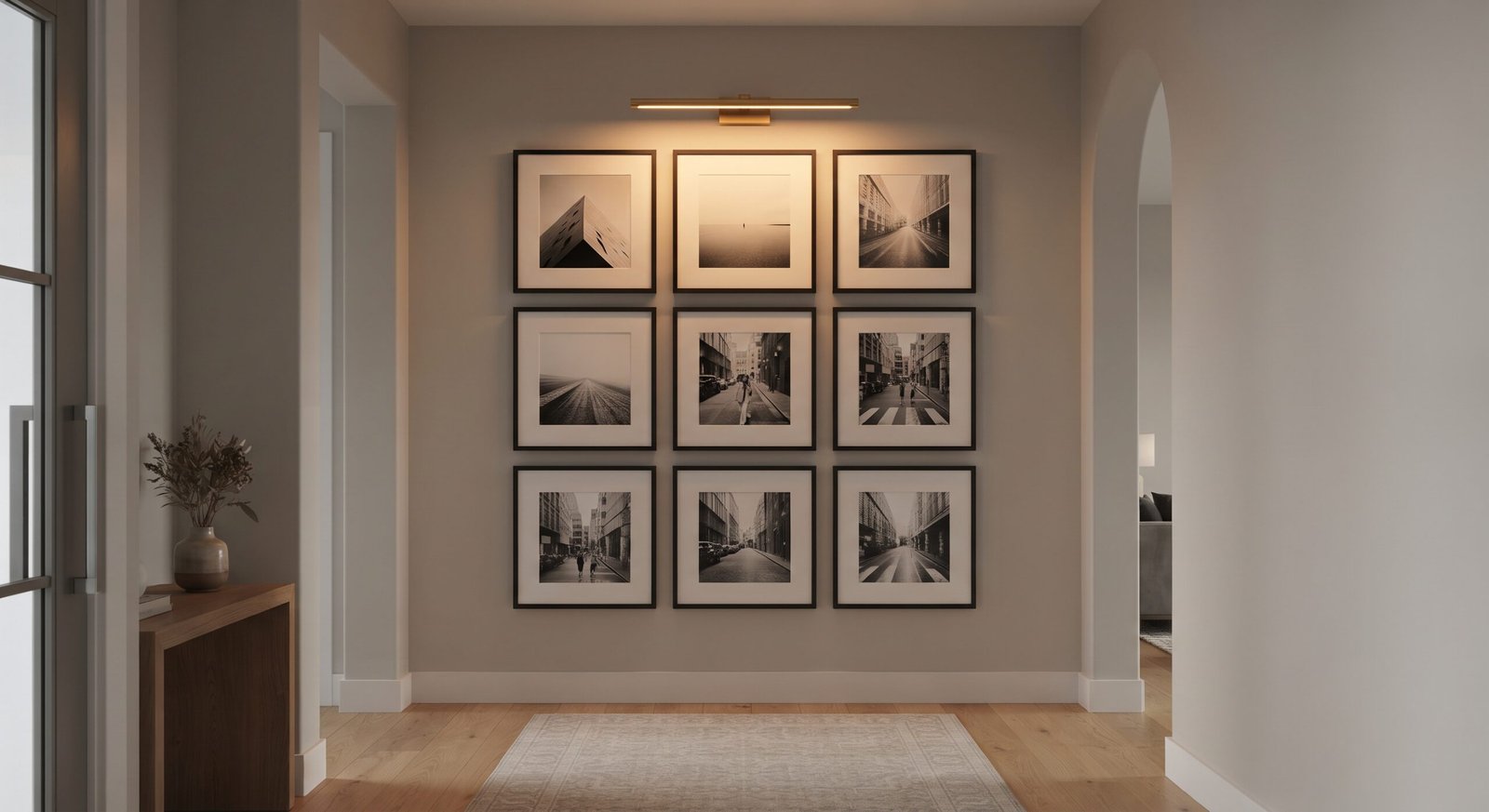
Consider installing dedicated picture lights, wall sconces, or adjustable recessed track lighting to highlight your collection during evening hours.
Conclusion
Mastering the art of gallery Walls transforms standard walls into dynamic storytelling canvases. By carefully planning your layout, keeping spacing consistent, and anchoring your collection around a central theme, you can achieve professional interior design results in any room of your house.
Frequently Asked Questions
How much space should I leave between frames in a gallery wall?
The golden rule for gallery Walls is to leave between 2 to 3 inches of space between each frame. This keeps the layout looking tight and unified without feeling cramped or overcrowded.
What is the ideal height to hang a gallery wall?
The center of your overall gallery arrangement (or the center of the primary anchor piece) should sit at eye level, which is approximately 57 to 60 inches from the finished floor.
Can I mix different frame colors and materials?
Yes! Mixing wood tones, metallic finishes, and black or white frames creates a wonderful eclectic look. However, ensure there is at least one repeating element—such as matching mat boards or a unified color palette within the art—to maintain visual harmony.
1 thought on “Gallery Walls: How to Curate & Hang Your Art”