
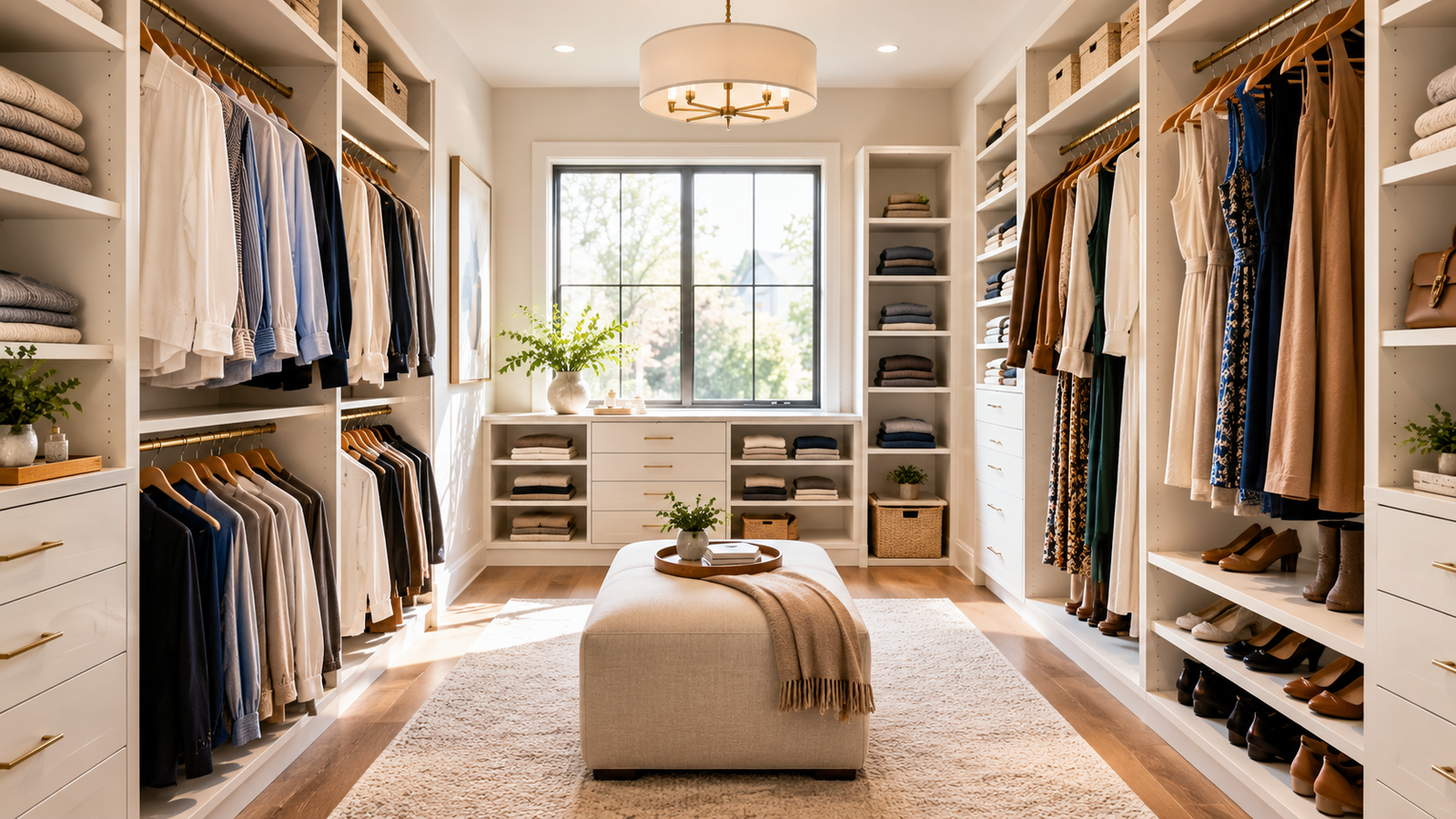
Wardrobe systems are the difference between a closet that works for you and one you fight with every morning. If you have ever stood in front of a packed rack thinking you have nothing to wear, the problem is rarely your clothes. It is the lack of structure.
Well-built wardrobe systems give every item a home, make outfits easy to see, and stop clutter from creeping back. You do not need a walk-in closet or a big budget to get there. You need a clear method.
In this guide, you will learn seven proven ways to build wardrobe systems that fit your space, your budget, and your daily routine.
Key Takeaways
- Wardrobe systems combine editing, zoning, storage hardware, and upkeep habits, not just shelves and bins.
- Always audit and declutter before you buy a single organizer.
- Zone your closet by category and wear frequency to cut getting-dressed time.
- Match your hardware to your closet type: reach-in, walk-in, or freestanding.
- Use vertical space and the back of the door before you expand.
- Rotate clothing by season to keep your daily rack light.
- A simple one-in, one-out rule keeps your closet organization working for years.
What Are Wardrobe Systems and Why Do They Matter?
A wardrobe system is a repeatable method for storing, sorting, and accessing your clothes. It includes the physical setup, such as rods, shelves, drawers, and hangers. It also includes the rules you follow, like where new items go and when you purge.
Think of it like a kitchen. A good kitchen has zones for prep, cooking, and storage. Wardrobe systems apply the same logic to your clothing.
Here is why it matters:
- You save time. When every category has a spot, you stop digging.
- You wear more of what you own. Visible clothes get worn.
- Your clothes last longer. Proper hangers and folding methods prevent stretching and wrinkles.
- You buy smarter. You can see gaps and duplicates before you shop.

1. Start Your Wardrobe Systems With a Full Closet Audit
Every effective wardrobe system begins with an honest edit. Skipping this step is the most common reason closet makeovers fail. You end up organizing clothes you never wear.
Pull everything out. Yes, everything. Lay it on your bed or floor so you can see the full picture.
Then sort each piece into four piles:
- Keep: You wear it regularly and it fits well.
- Maybe: You like it but have not worn it in a year. Store it in a bin and set a six-month check-in.
- Donate or sell: It does not fit, suit you, or match your life now.
- Repair or tailor: Worth saving with a quick fix.
Be direct with yourself. If you have not worn something in 12 months, you probably will not wear it next month either.
2. Build a Capsule Core First
Once you have edited, identify your core pieces. This is the heart of a capsule wardrobe: versatile items that mix and match, like well-fitting jeans, neutral tops, a blazer, and comfortable shoes.
Choosing Wardrobe Systems for Small Closets
If your space is tight, a capsule approach matters even more. Smaller closets cannot support endless pieces, so your wardrobe systems must lean on fewer, better items. Aim for a core of 30 to 40 pieces you love, then add seasonal extras on top.
This does not mean owning less for the sake of it. It means every item earns its spot.
3. Zone Your Closet by Category and Frequency
Zoning is the backbone of strong wardrobe organization. Instead of throwing items wherever they fit, you group them logically and place the most-used items at eye level.
Use this simple layout:
- Eye level: Everyday work and weekend outfits.
- Upper shelves: Seasonal items, extra bedding, and occasional bags.
- Lower area: Shoes, folded denim, and gym gear.
- Left to right: Sort by type (tops, dresses, pants), then by color.
Color sorting is not just for looks. It lets you spot an outfit in seconds. Within each zone, keep sleeve lengths and garment types together.

4. Pick the Right Hardware: Which Wardrobe Systems Fit Your Space?
Hardware turns a plan into a working system. The right choice depends on your closet type, your clothing mix, and your budget.
Reach-In Closets
Reach-in closets benefit most from adjustable systems. Look for wire or laminate wardrobe systems with movable shelves and rods, so you can reconfigure as your wardrobe changes. A double-hang setup, with one rod above another, nearly doubles your hanging space for shirts and folded pants.
Walk-In Closets
Walk-in closets let you mix long-hang, double-hang, shelving, and drawers. Add an island or bench if you have room. Keep the center clear so you can move freely.
Freestanding Wardrobe Systems for Renters
If you rent or have no built-in closet, freestanding wardrobe systems are a smart fix. Open garment racks, modular cube shelving, and standalone wardrobes require no drilling and move with you. Look for sturdy metal frames and adjustable shelves.
Wardrobe Systems on a Budget
You can build a functional setup for under $100:
- Matching slim hangers (about $15 to $25 for a set of 50)
- Shelf dividers to stop stacks from toppling
- Stackable clear bins for accessories
- Over-the-door hooks and shoe organizers
Premium custom systems cost much more, but a thoughtful budget build often does 90 percent of the job.

5. Use Vertical Space and Hidden Zones
Most closets waste their best real estate: the vertical space. Before you buy a bigger wardrobe, use what you have.
- Install a second shelf above the main one.
- Hang slim hooks on the inside of the closet wall for bags and belts.
- Use an over-the-door organizer for shoes, scarves, or accessories.
- Slide flat bins under beds for off-season items.
- Add cascading hangers for tops, which stack garments vertically.

6. Rotate Your Wardrobe Seasonally
Seasonal rotation keeps your daily rack light and your clothes in better shape. Twice a year, swap your active clothing with your off-season storage.
Here is a simple routine:
- Wash or dry-clean everything before storing.
- Store knitwear folded, never hung, to prevent stretching.
- Use breathable cotton bins or garment bags instead of sealed plastic, which can trap moisture.
- Add cedar blocks or lavender sachets to deter moths.
- Label every bin so you can find items fast.
Rotation is also your natural moment to reassess. When you pull out winter coats, ask whether you wore them last year. Your wardrobe systems stay sharp when you edit regularly.

7. Maintain Your System With Simple Habits
Even the best wardrobe systems fail without upkeep. The good news is that maintenance takes minutes, not hours.
How to Keep Wardrobe Systems Working Long Term
- One in, one out. When you buy something new, donate one item.
- Return items right away. Do not let clothes pile on a chair.
- Do a 10-minute reset weekly. Straighten hangers, refold, and clear the floor.
- Run a quarterly mini-audit. Check for anything you have not worn.
- Keep a donation bag in the closet. Drop items in as soon as you decide to let go.
These habits protect your investment and keep your closet organization from sliding back into chaos.

Common Wardrobe Systems Mistakes to Avoid
Even motivated people trip over the same problems. Watch for these:
- Buying organizers first. Containers without an edit just hold clutter more neatly.
- Mixing hanger types. Uneven hangers waste space and look messy.
- Overpacking shelves. If you cannot see or reach an item, you will not wear it.
- Ignoring how you actually dress. Build around your real life, not an idealized one.
- Skipping maintenance. A system is a habit, not a one-time project.
Conclusion
Strong wardrobe systems are not about perfection or expensive hardware. They are about clarity. Audit honestly, build a capsule core, zone by category, pick hardware that fits your space, and protect the setup with small, consistent habits.
Start this weekend with just one step: the full closet audit. Once you see everything you own, the rest of your wardrobe systems fall into place. Pick the method that fits your space today, and your mornings will get easier right away.
FAQs About Wardrobe Systems
What are the best wardrobe systems for small closets?
Adjustable wire or laminate systems with a double-hang rod work best. They add hanging space and let you reconfigure shelves as your clothing changes.
How much do wardrobe systems cost?
A budget setup with hangers, dividers, and bins can run under $100. Mid-range modular wardrobe systems typically cost several hundred dollars, while custom built-ins can reach into the thousands.
What is the best wardrobe system for renters?
Freestanding wardrobe systems, such as garment racks and modular shelving, are ideal. They need no drilling and can move with you.
How often should I reorganize my wardrobe?
Do a light reset weekly, a mini-audit each quarter, and a full seasonal rotation twice a year.
Should I declutter before buying a wardrobe system?
Yes. Edit first so you only buy storage for clothes you actually wear.