
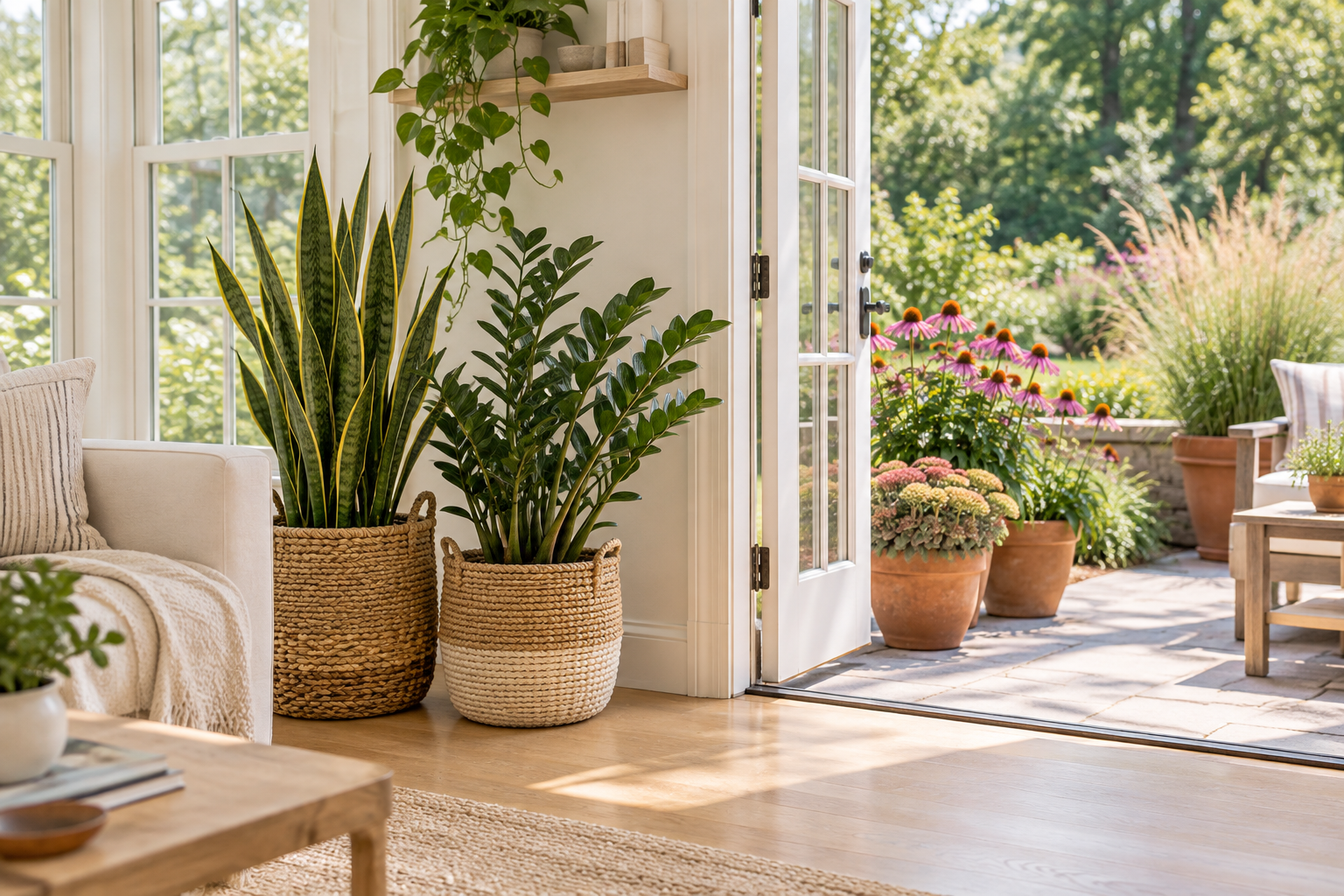
Low maintenance plants let you enjoy green, fresh spaces without spending hours watering, pruning, or worrying.
Maybe you travel often, work long hours, or have a history of plants that didn’t survive. The good news is that some plants truly do well with very little attention.
These low maintenance plants work indoors and outdoors, in sun and shade, and for beginners and busy households. You’ll get light, water, and USDA zone guidance, plus pet-safety notes and US store picks.
Key Takeaways
- The best low maintenance plants tolerate irregular watering and a range of light.
- Overwatering kills more houseplants than neglect, so check the soil first.
- Snake plants, ZZ plants, and pothos are top indoor picks for beginners.
- Sedum, coneflower, and hostas are tough outdoor choices in many US zones.
- Always check the ASPCA list if you have cats or dogs.
What Makes a Plant Low Maintenance?
Not every green plant is easy to care for. The best low maintenance plants share a few traits:
- Drought tolerance: They store water and forgive missed waterings.
- Flexible light needs: They handle bright indirect light or lower light.
- Pest and disease resistance: They rarely need treatment.
- Slow, steady growth: They don’t need constant pruning or repotting.
- Hardiness for your zone: Outdoor plants should match your USDA Hardiness Zone.
Low Maintenance Plants at a Glance
| # | Plant | Where | Light | Water | Pet-Safe? |
|---|---|---|---|---|---|
| 1 | Snake plant | Indoor | Low to bright | Every 2–4 weeks | No |
| 2 | ZZ plant | Indoor | Low to bright indirect | Every 2–4 weeks | No |
| 3 | Pothos | Indoor | Low to bright indirect | When top 1–2 inches dry | No |
| 4 | Spider plant | Indoor | Bright indirect | Keep lightly moist | Yes |
| 5 | Cast iron plant | Indoor | Low | When top inch dries | Yes |
| 6 | Peperomia | Indoor | Medium to bright indirect | When soil dries out | Yes |
| 7 | Sedum | Outdoor | Full sun | Very little once established | Check label |
| 8 | Daylily | Outdoor | Sun to part shade | Moderate | No (toxic to cats) |
| 9 | Hosta | Outdoor | Shade | Moderate | No |
| 10 | Purple coneflower | Outdoor | Full sun | Low once established | Yes |
| 11 | Lavender | Outdoor | Full sun | Low once established | No |
Confirm pet safety for your exact plant on the ASPCA website before you buy.
11 Low Maintenance Plants That Thrive Indoors and Outdoors
Low Maintenance Plants for Indoors
1. Snake Plant
The snake plant is a classic for a reason. It tolerates low light, dry air, and forgetful watering.
Water every two to four weeks, depending on light and season. Let the soil dry fully between drinks.
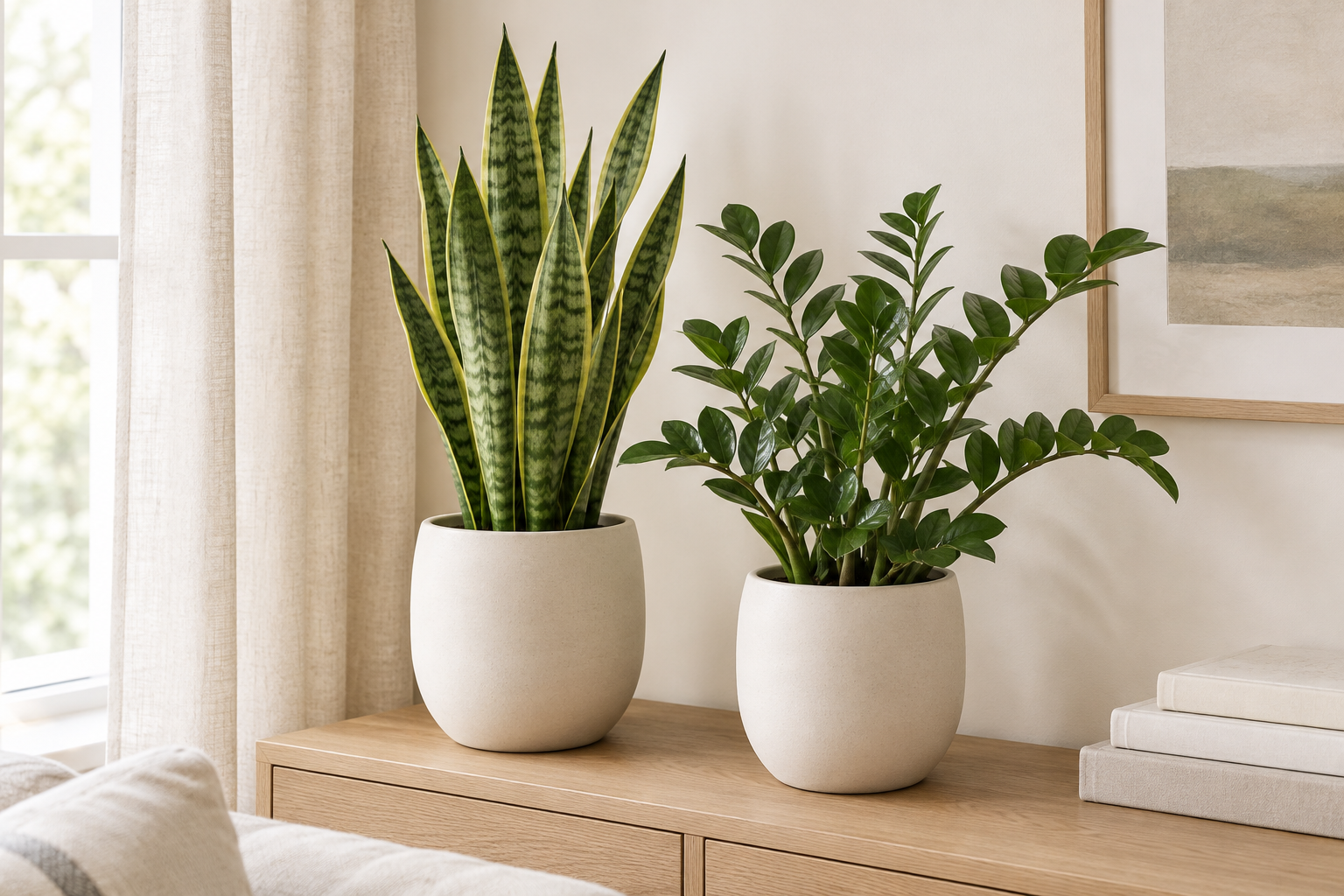
2. ZZ Plant
The ZZ plant stores water in its thick rhizomes, so it handles drought well. Its glossy leaves look stylish in any room.
Place it in medium to bright indirect light and water only when the soil is dry. Keep it away from pets and kids, since it’s toxic if chewed.
3. Pothos
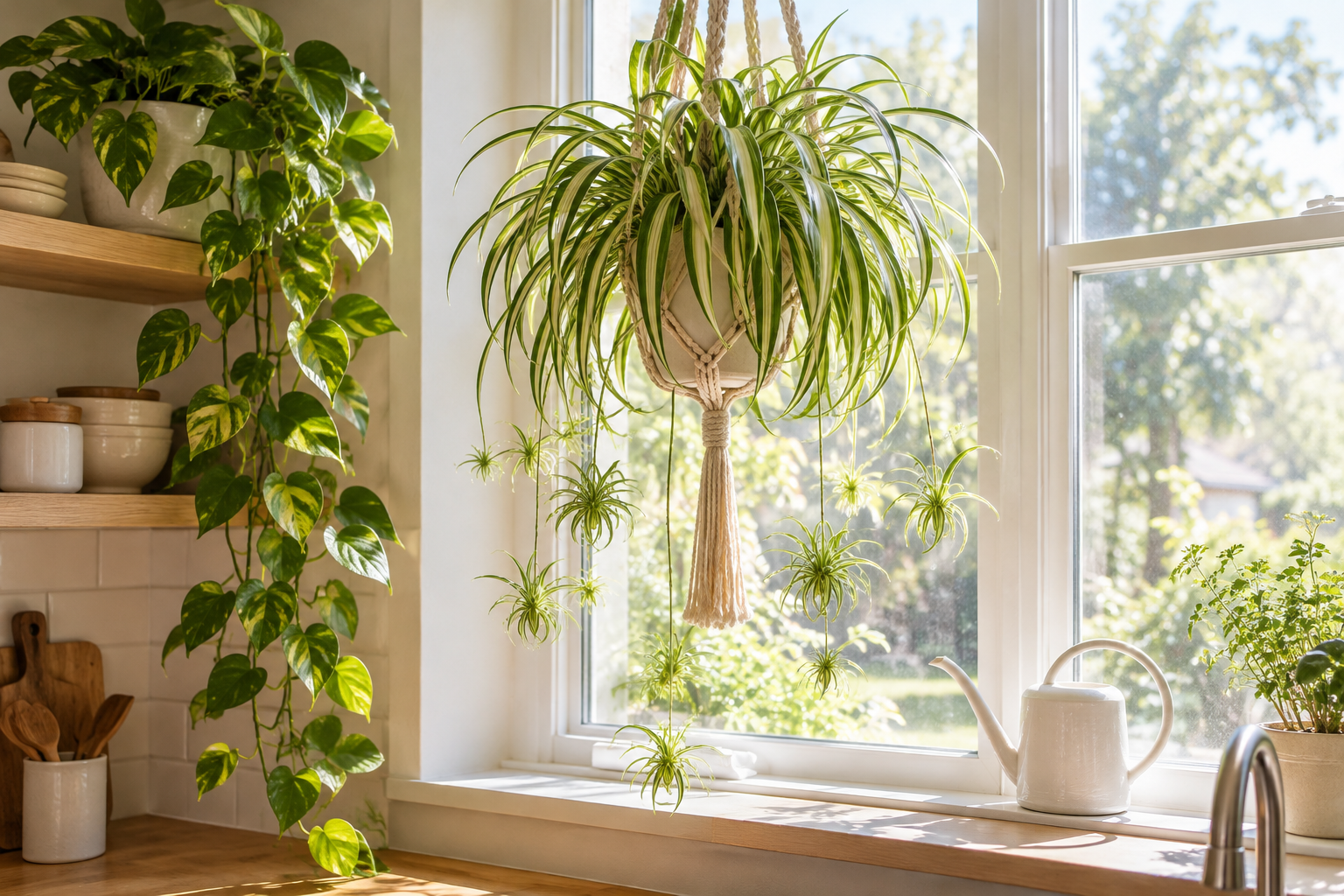
Pothos is one of the easiest trailing plants. It grows in low or bright indirect light and tells you when it’s thirsty by drooping slightly.
Let it trail from a shelf or train it up a trellis. Pothos is toxic to pets, so hang it out of reach.
4. Spider Plant
Spider plants produce arching leaves and baby “pups” you can pot up for free. They’re considered pet-safe by the ASPCA.
Give them bright indirect light and keep the soil lightly moist. Brown tips often mean tap water minerals or dry air.
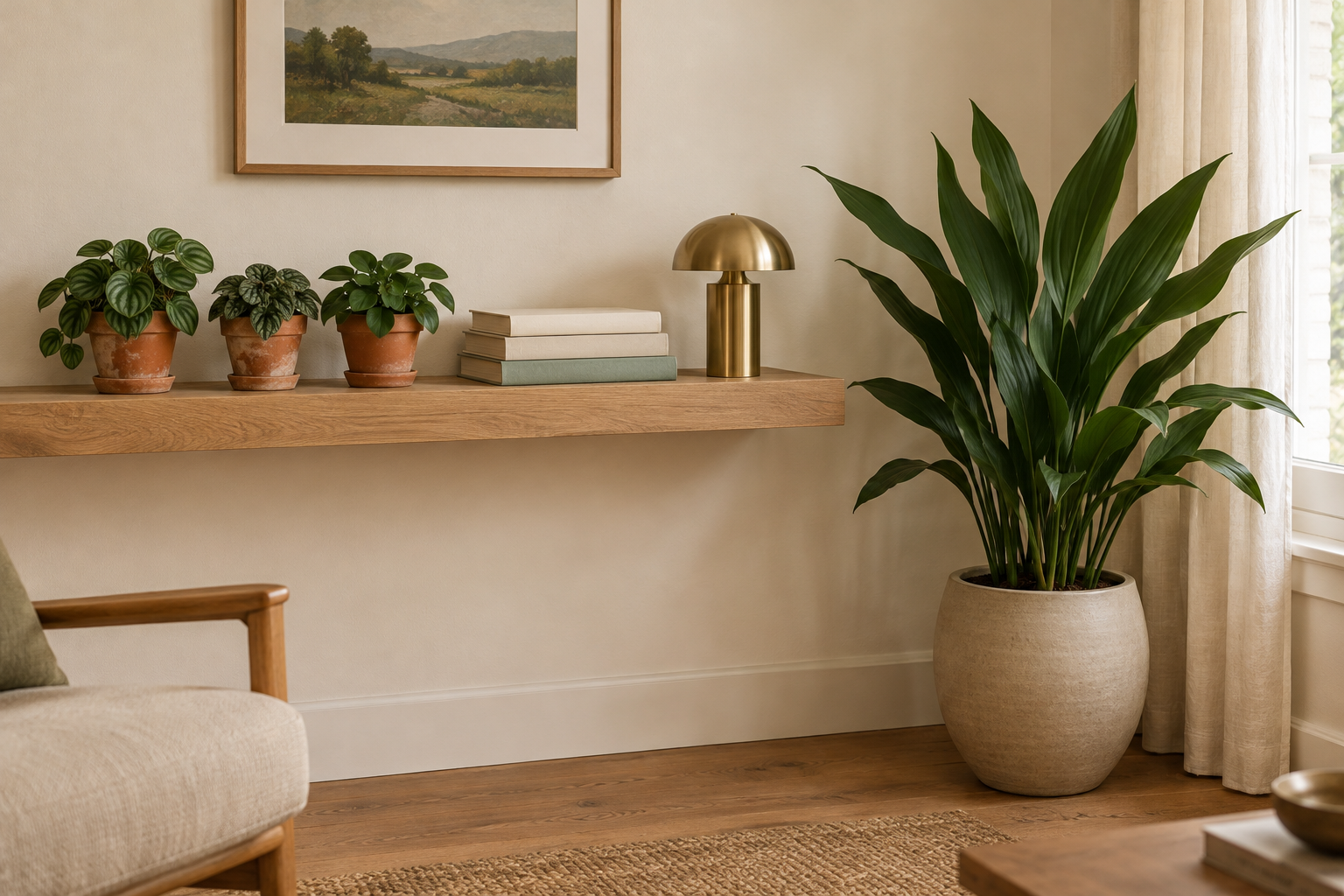
5. Cast Iron Plant
The cast iron plant earns its name. It survives low light, uneven watering, and temperature swings.
Water when the top inch or two of soil is dry. It grows slowly, so it won’t outgrow its spot quickly.
6. Peperomia
Peperomias come in many leaf shapes and stay compact. They’re ideal for desks, shelves, and small spaces.
Give them medium to bright indirect light. Water only when the soil is dry, since their leaves store moisture.
Low Maintenance Plants for Outdoors
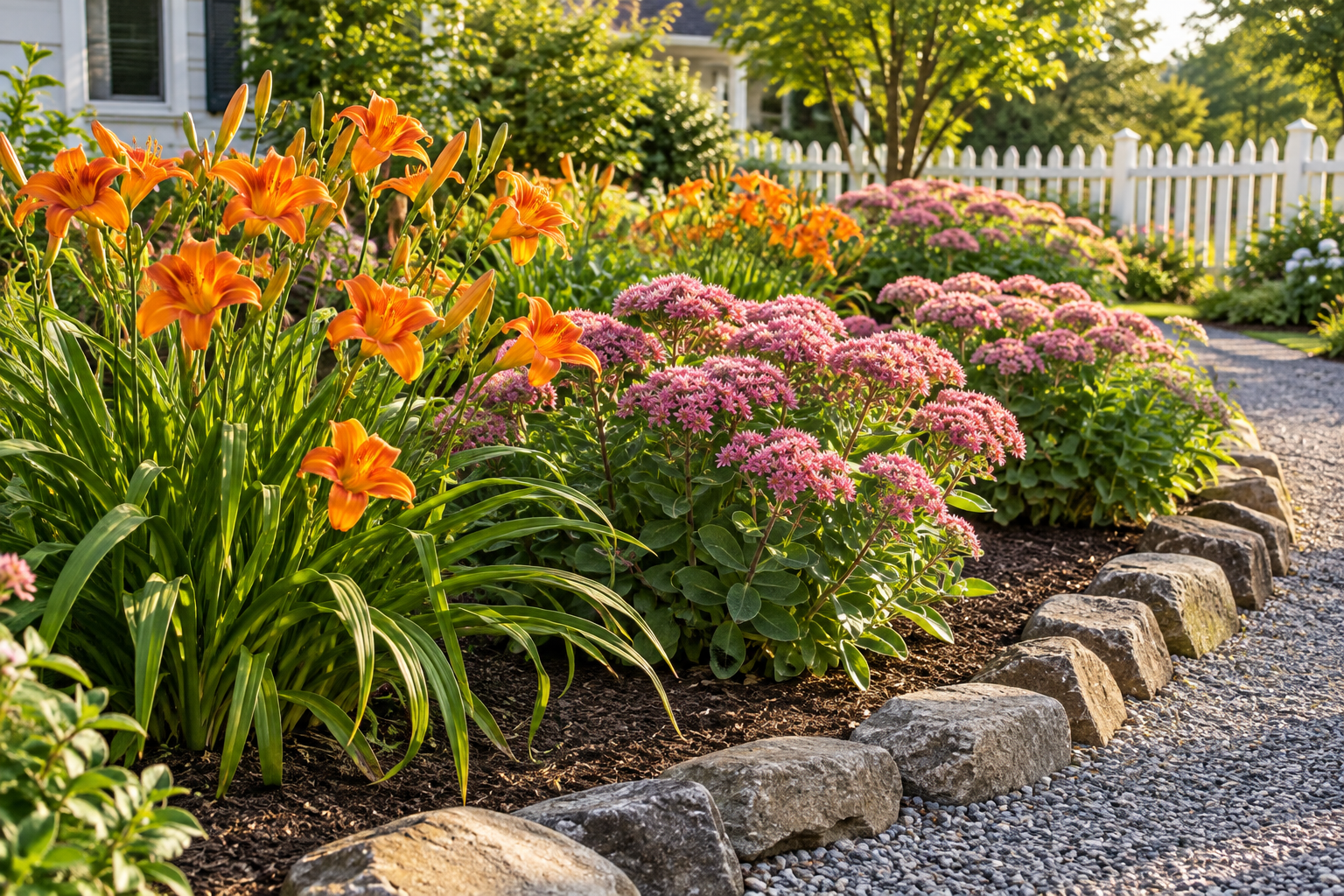
7. Sedum
Sedum, also called stonecrop, thrives in full sun and poor soil. Taller varieties like ‘Autumn Joy’ grow in many zones, often 3 to 9.
Water sparingly once established. The late-summer blooms also attract bees and butterflies.
8. Daylilies
Daylilies are tough perennials that bloom for weeks. They grow in sun to part shade and in many zones, often 3 to 9.
Note that true lilies and daylilies are dangerous to cats. Skip them if cats roam your yard.
9. Hostas
Hostas are the go-to plant for shade. Their large leaves add texture under trees and along north-facing walls.
They thrive in many zones, often 3 to 9. Slugs can chew the leaves, so use mulch and check them in spring.
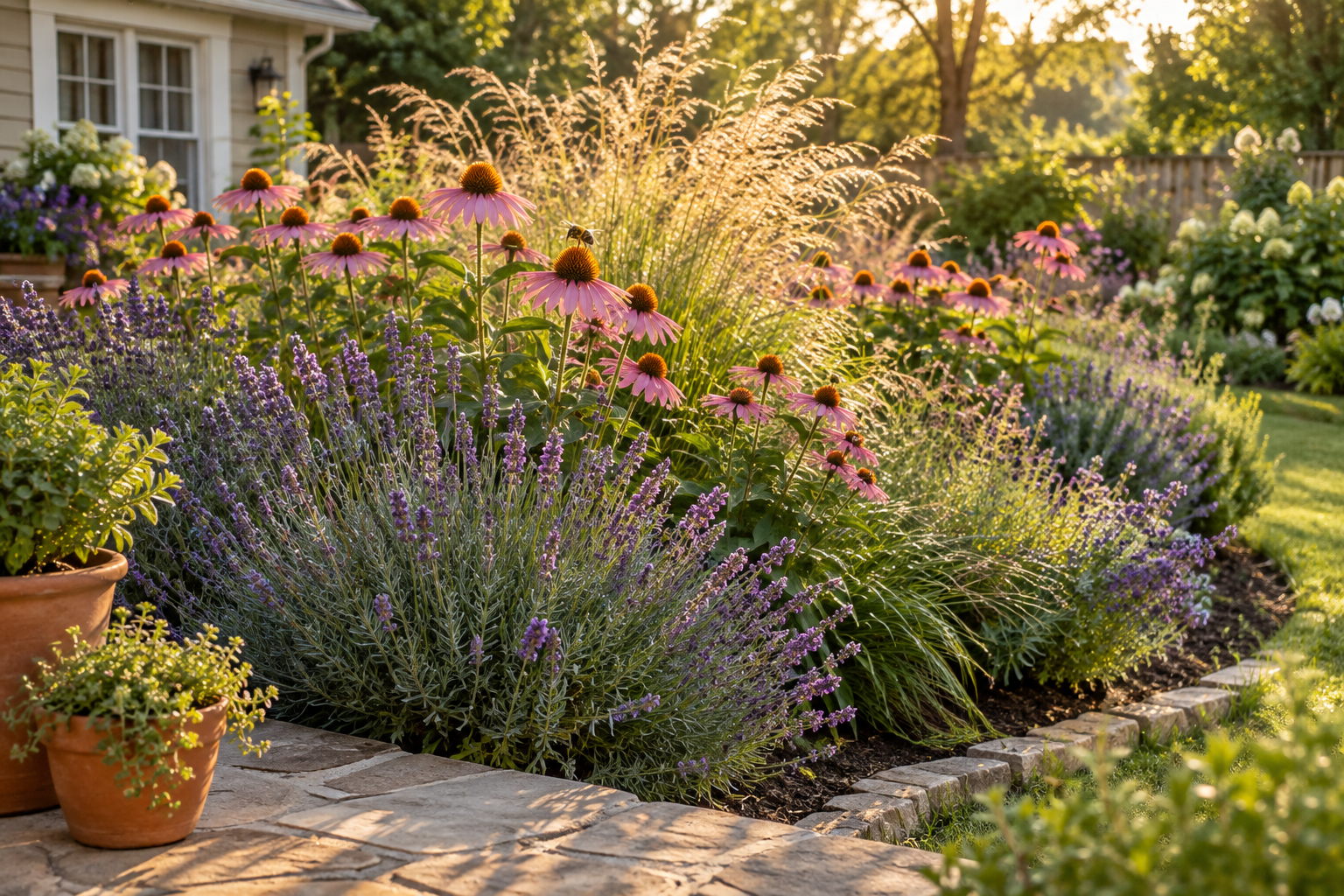
10. Purple Coneflower
Purple coneflower (Echinacea) loves full sun and handles heat and drought. It blooms from midsummer into fall and feeds pollinators.
Leave the seed heads in fall for goldfinches, then cut back in early spring. It’s often listed as pet-safe by the ASPCA.
11. Lavender
Lavender needs full sun and well-drained soil. English lavender usually grows well in zones 5 to 9.
Don’t overwater, since wet roots cause rot. Trim lightly after flowering to keep it tidy.
Low Maintenance Plants for Pets
Pet safety matters when you choose plants. Spider plants, cast iron plants, and peperomias are generally listed as pet-safe.
Snake plants, ZZ plants, pothos, hostas, lavender, and daylilies can be harmful if eaten. Keep them out of reach, or choose safer alternatives.
Low Maintenance Plants: Care Basics That Work Every Time
A few simple habits keep low maintenance plants thriving.
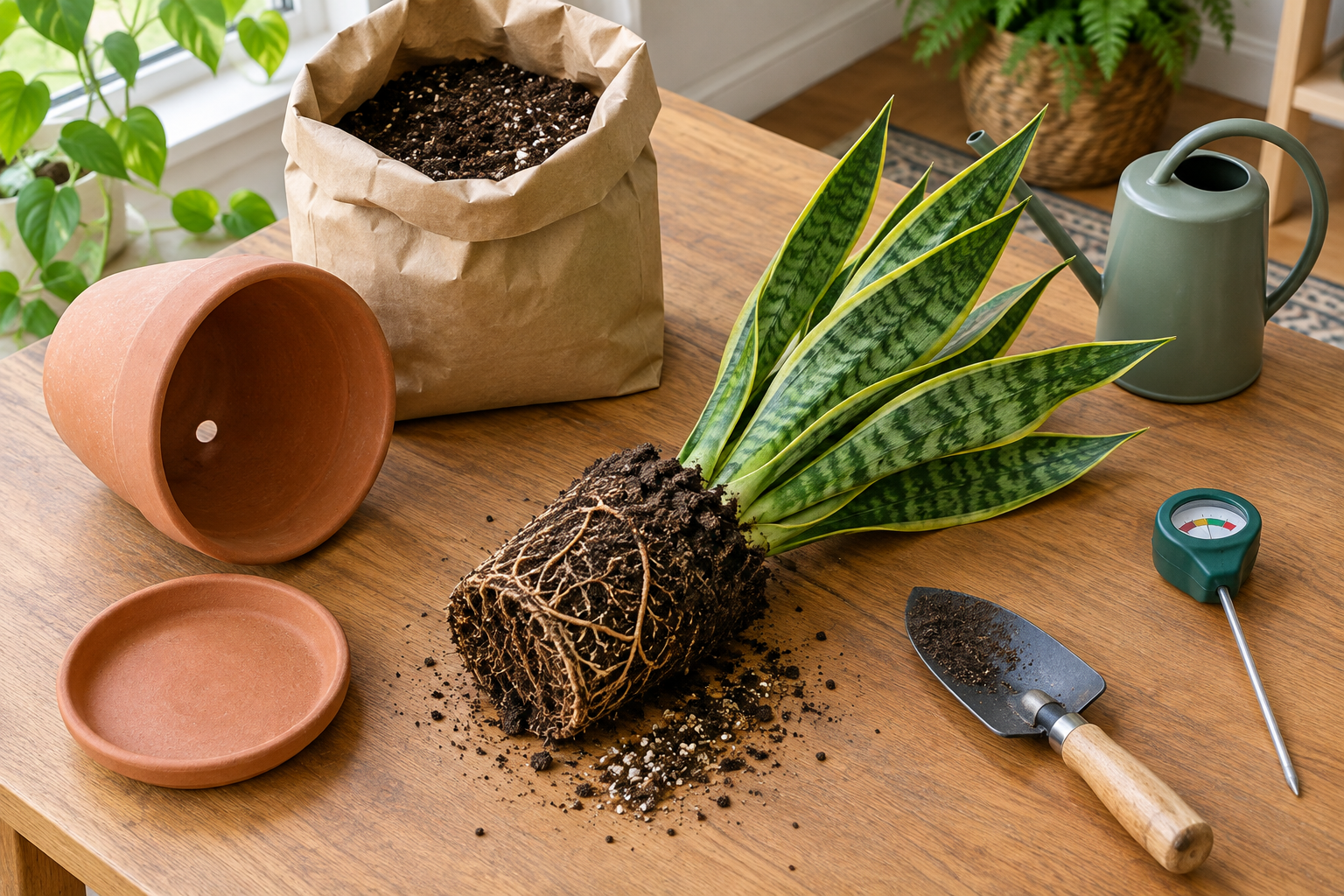
- Check the soil first. Push a finger 1 to 2 inches into the soil. Water only if it feels dry.
- Use pots with drainage holes. Standing water rots roots.
- Choose well-draining soil. Use a cactus or houseplant mix for indoor plants.
- Match plant to light. Place sun lovers near bright windows and shade plants in lower light.
- Mulch outdoor beds. A 2 to 3 inch layer holds moisture and blocks weeds.
Low Maintenance Plants on a Budget
You can fill your home and yard for under $100. Start with a few small plants, and propagate pothos and spider plant pups for free.
Here’s where to shop:
- Home improvement stores: Home Depot and Lowe’s
- Grocery and big-box stores: Trader Joe’s, Walmart, and Costco
- Home stores: IKEA and Target for pots and planters
- Local sources: Nurseries, plant swaps, and Facebook Marketplace
Fall is a great time to buy perennials, since many garden centers offer sales.
Common Plant Mistakes to Avoid
Even low maintenance plants struggle with these mistakes:
- Overwatering and using pots without drainage
- Placing plants in the wrong light
- Ignoring your USDA zone for outdoor plants
- Choosing a pot that’s too large
- Forgetting to check pet safety
Conclusion
Low maintenance plants give you the benefits of greenery without the stress. Start with one or two that match your light, your pets, and your climate.
Water thoughtfully, give them the right spot, and they’ll reward you for years. Pick two or three low maintenance plants this weekend, and enjoy a greener, calmer home.
FAQs About Low Maintenance Plants
What are the best low maintenance plants for beginners?
Snake plants, ZZ plants, pothos, and spider plants are forgiving indoors. Sedum and coneflower are easy outdoors.
What are the best low maintenance plants for low light?
Snake plants, ZZ plants, cast iron plants, and pothos handle lower light well.
Which low maintenance plants are safe for cats and dogs?
Spider plants, cast iron plants, and peperomias are generally listed as pet-safe. Always verify with the ASPCA.
How often should I water low maintenance plants?
Check the soil. Most indoor types need water every one to four weeks, depending on light and season.