
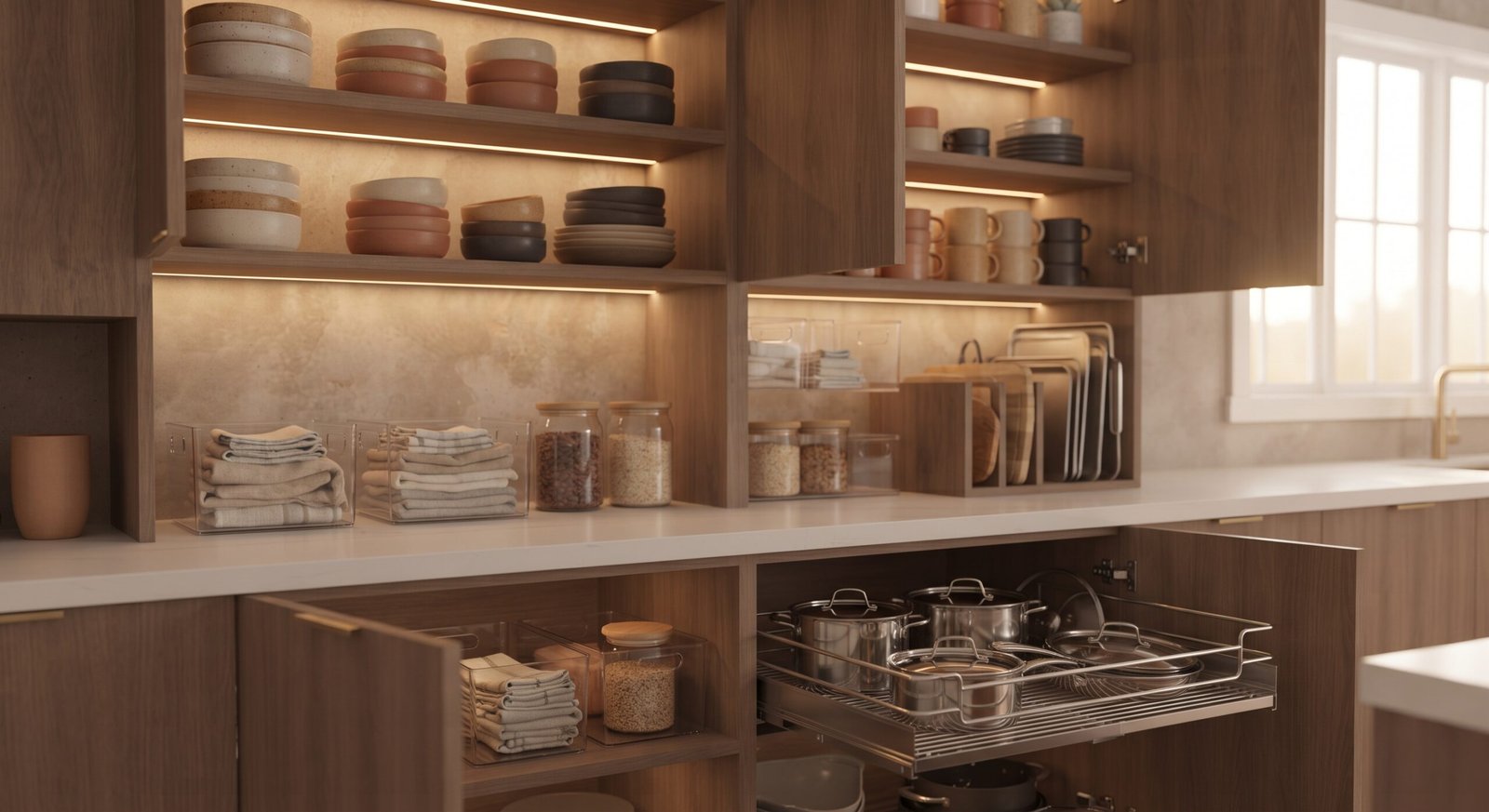
Every home cook knows the frustration of playing Jenga with pots, pans, and mismatched food storage containers every time dinner prep begins. Deep cupboards and dark corners often become graveyards for forgotten appliances and lost lids. Achieving true kitchen cabinet optimization changes everything, turning chaotic doors into an ergonomic, streamlined system that saves time and reduces daily stress.
Whether you are remodeling a compact apartment kitchen or looking to audit a large family pantry space, implementing clever hardware and strategic zoning makes all the difference. In this guide, we will explore the core pillars of kitchen cabinet optimization to help you maximize every square inch of your storage.
Key Takeaways
- Audit and Purge First: Empty every shelf completely to assess what you actually use before buying new organizers.
- Capitalize on Vertical Space: Use shelf risers, stackable bins, and door-mounted racks to double your vertical storage capacity.
- Install Pull-Out Mechanics: Retrofit deep lower cabinets with sliding drawers or pull-out trays to eliminate blind spots.
- Zone by Frequency: Keep daily dishware and cookware at eye level, reserving high and low shelves for seasonal items.
1. Auditing and Zoning Your Cupboards
The foundation of successful kitchen cabinet optimization begins with a blank slate. Over the years, cupboards collect duplicate tools and items that no longer serve your cooking habits.
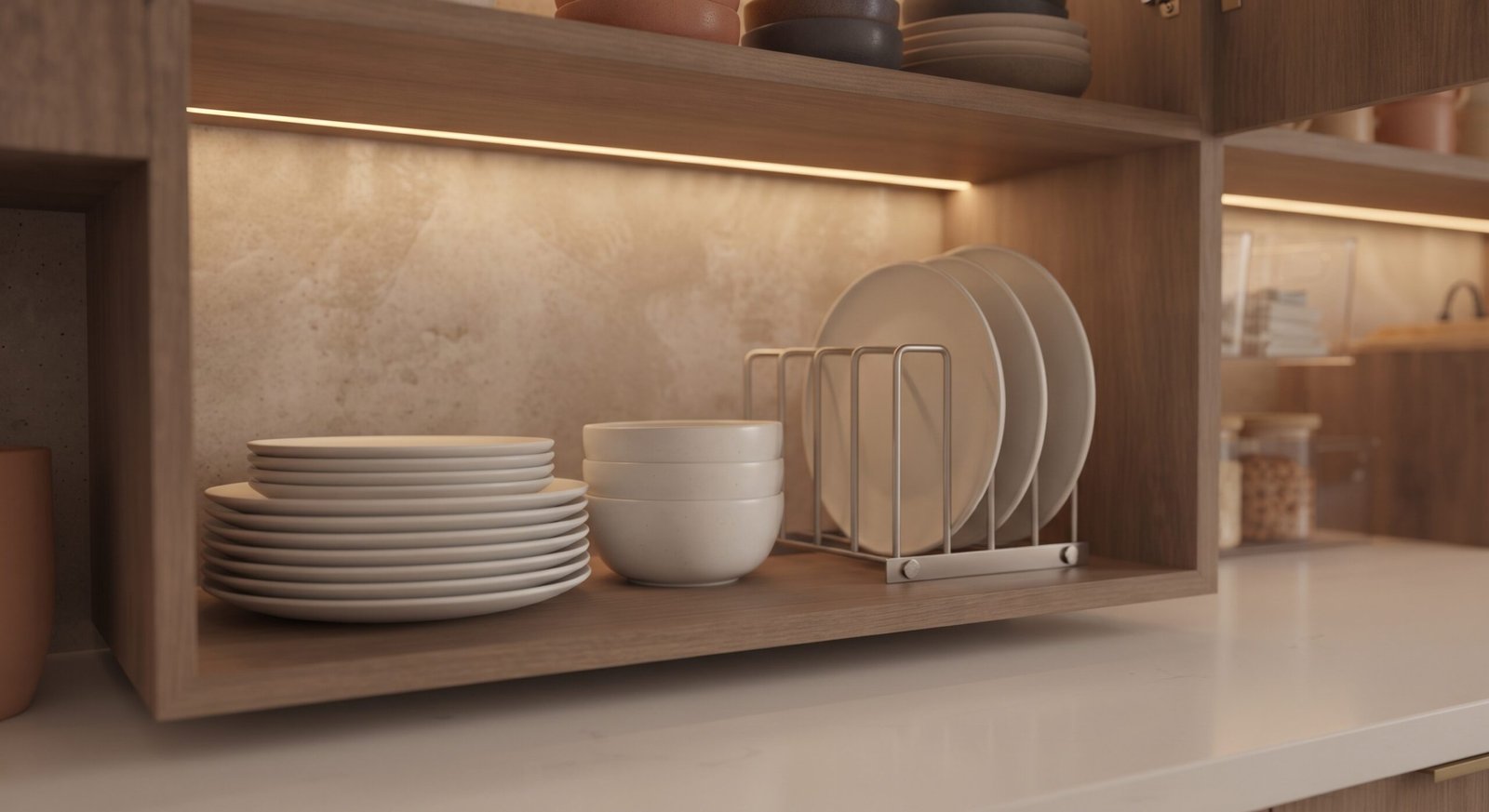
Take everything out and group items into logical zones: baking supplies, everyday dishware, cookware, and cleaning products.
“Effective cabinet optimization is not about cramming more items into a small space; it is about creating effortless access to the tools you use most.”
2. Comparing Cabinet Organization Hardware
Different cabinet layouts demand different hardware solutions to maximize efficiency. The table below compares the most popular options for kitchen cabinet optimization:
| Hardware Solution | Best Suited For | Primary Benefit |
| Pull-Out Sliding Shelves | Deep lower base cabinets | Eliminates the need to crawl on the floor to reach items in the back. |
| Tiered Shelf Risers | Upper spice and dish cupboards | Doubles vertical storage space by elevating rows so labels remain visible. |
| Cabinet Door Racks | Cleaning supplies, wraps, & lids | Utilizes unused interior door surfaces to free up interior shelf depth. |
| Vertical Baking Sheet Dividers | Base cabinets near the stove | Stores sheet pans and cutting boards vertically to prevent tipping piles. |
Storing heavy cookware below counter height and frequently used items between shoulder and waist level significantly minimizes physical strain.
3. Maximizing Lower Cabinets and Deep Shelves
Lower base cabinets are notoriously difficult to manage because bending down makes the back corners virtually invisible. Transforming these dark spaces requires clever hardware interventions.
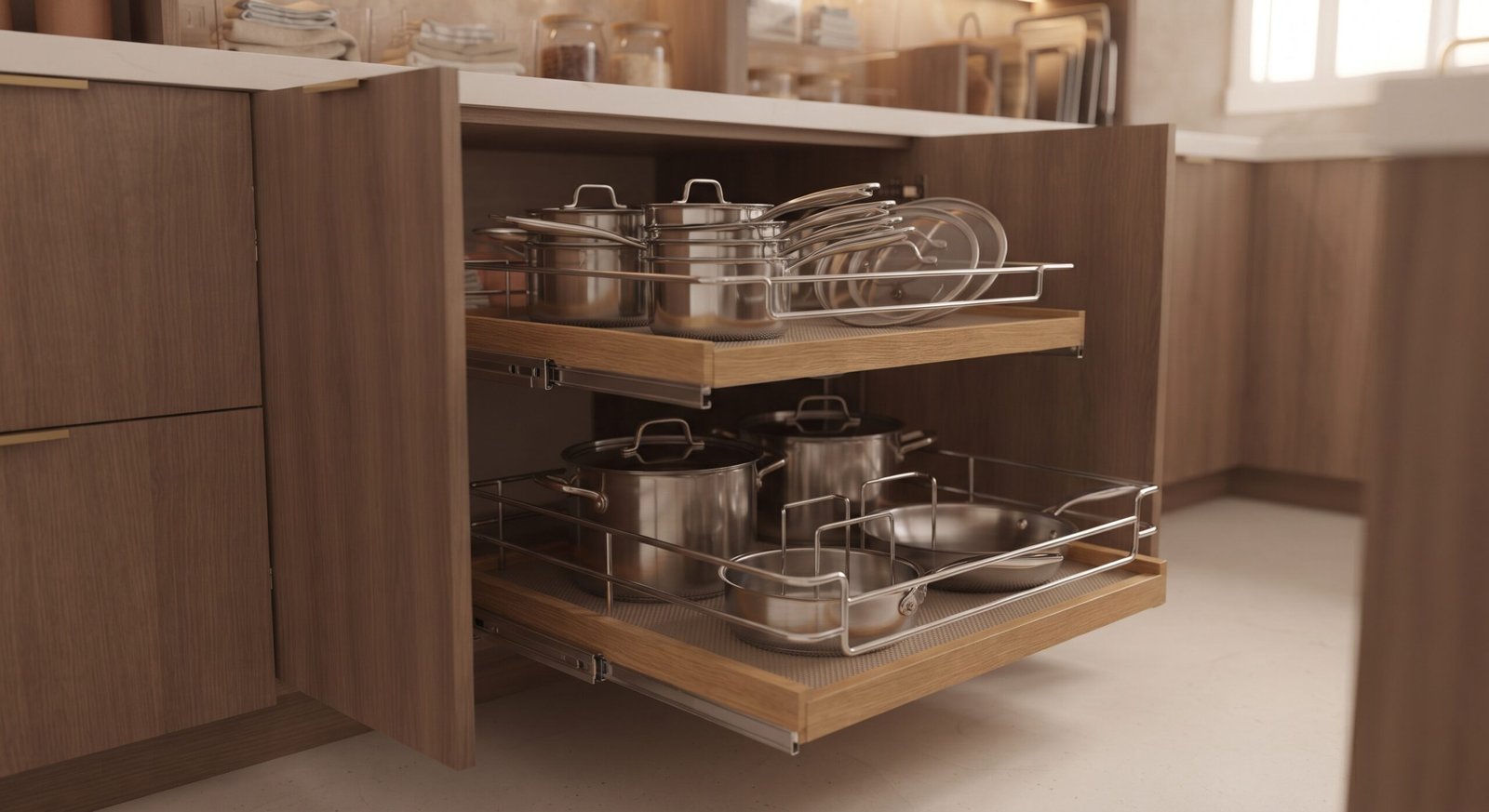
- Lazy Susans and Pivot Trays: Install rotating carousels in corner base cabinets to bring blind spots directly into view with a single spin.
- Vertical Tray Dividers: Use wire separators in narrow lower slots to store baking sheets, cutting boards, and serving platters on their sides.
4. Lighting and Long-Term Maintenance
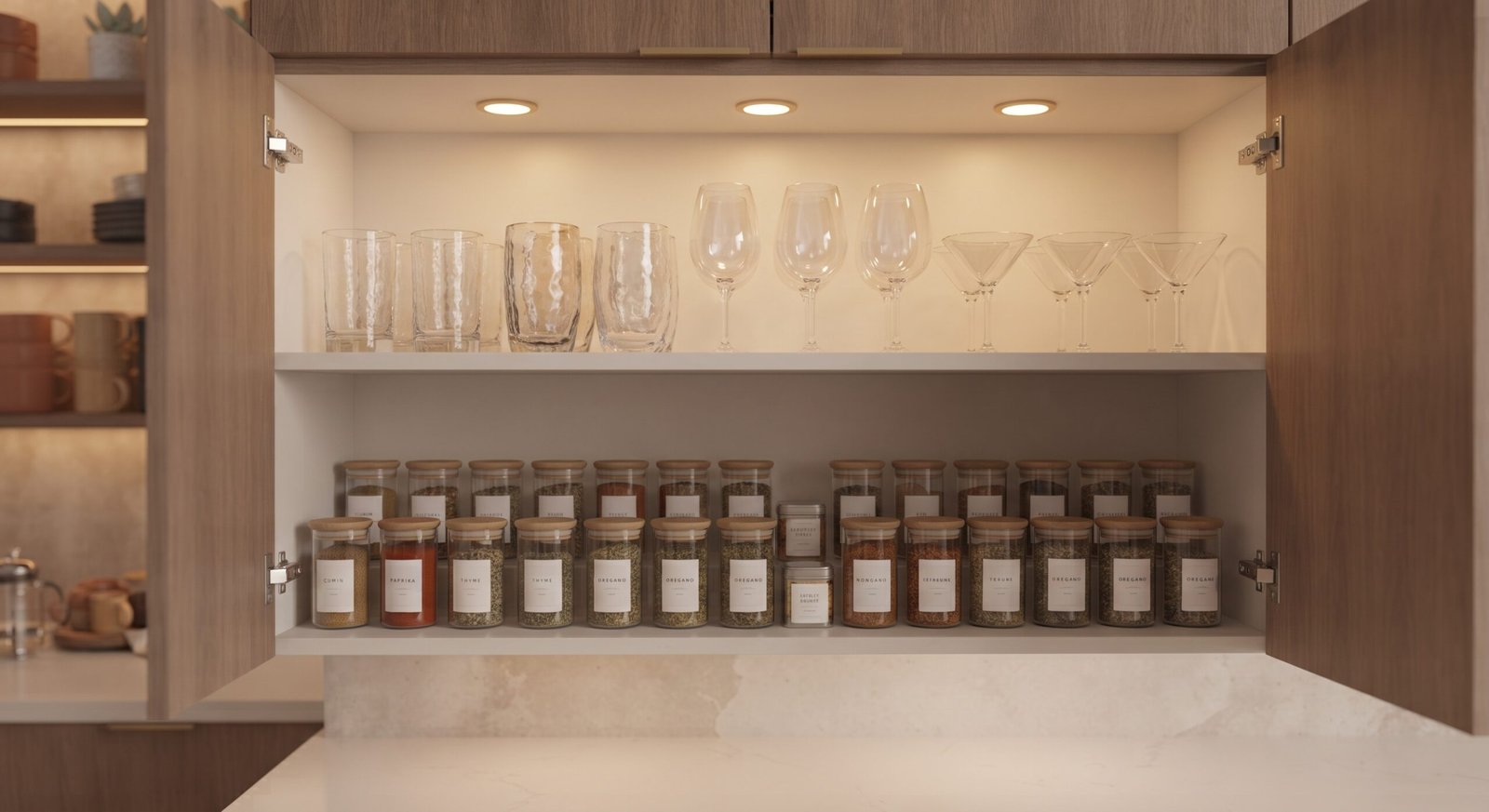
Even the most well-organized cabinet can fall back into disarray without proper visibility and upkeep. Adding internal lighting illuminates dark corners, while a quarterly 10-minute reset keeps items in their designated zones.
Conclusion
Mastering kitchen cabinet optimization elevates both your daily cooking experience and your home’s overall organization. By purging unnecessary items, investing in pull-out hardware, and zoning your shelves intelligently, you can transform chaotic cupboards into a seamless culinary workflow.
Frequently Asked Questions
What is the easiest way to organize deep lower cabinets?
The absolute best way to manage deep lower cabinets is to install retrofit pull-out sliding drawers. If installation is not an option, use heavy-duty bins with handles that slide out like drawers to easily access items in the back.
How do I stop Tupperware lids from creating a mess?
Store food storage containers with their lids snapped on to prevent mismatched pieces from separating. Alternatively, use a dedicated upright vertical acrylic bin specifically designed to hold lids sorted by size.
How can I make dark kitchen cabinets brighter?
Install battery-operated or hardwired LED puck lights or strip lighting inside upper and lower cabinets. Pairing internal lighting with light-colored shelf liners instantly brightens dark wooden interiors and makes finding items easier.