
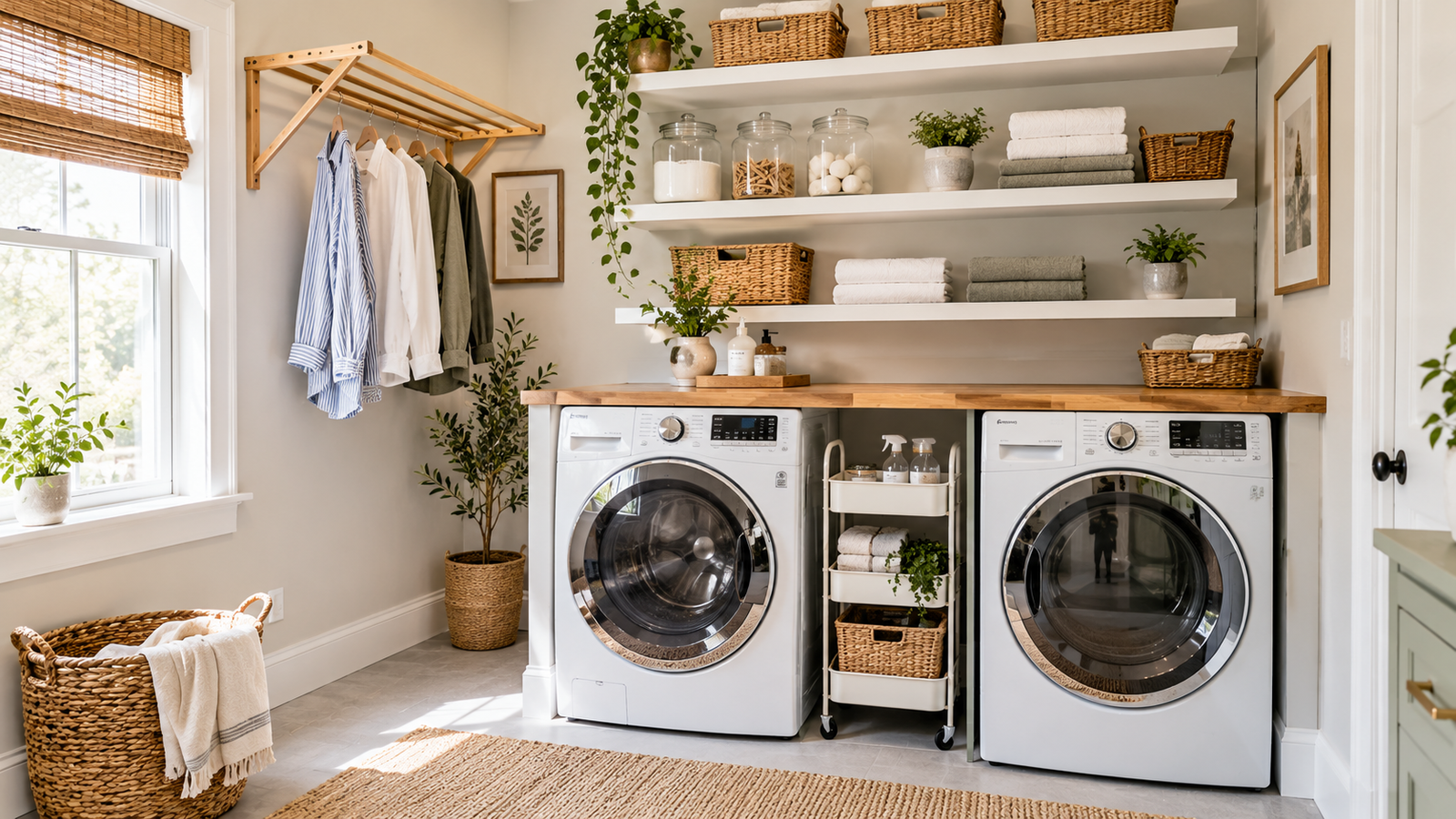
Laundry room organization turns the most overlooked room in your home into a space that actually works. If yours feels like a dumping ground for detergent bottles, mismatched socks, and overflowing baskets, you are not alone.
Good laundry room organization saves time, protects your clothes, and takes the stress out of laundry day. You do not need a full renovation. Most of the upgrades below cost under $50 and take a single afternoon.
Here are nine easy hacks that work in closets, basements, garages, and full-size laundry rooms.
Key Takeaways
- Laundry room organization starts with a full declutter, not a shopping trip.
- Group supplies into zones: sorting, washing, drying, and folding.
- Use walls and the space above your machines before you buy anything bulky.
- Clear containers and labels make supplies easy to find and easy to refill.
- A dedicated folding surface cuts wrinkles and speeds up laundry day.
- Small daily habits keep your laundry room ideas working for years.
What Is Laundry Room Organization and Why Does It Matter?
Laundry room organization is a system for storing supplies, sorting clothes, and moving laundry from dirty to folded with as little effort as possible. It covers the physical setup, such as shelves, bins, and racks. It also covers the habits that keep the room tidy.
Why does it matter? Because a messy laundry room costs you more than you think.
- You lose time. Hunting for stain remover or a missing sock adds up fast.
- You waste money. Buried products get forgotten, and you buy duplicates.
- Your clothes suffer. Damp piles and overloaded baskets lead to wrinkles and musty smells.
- You put off the chore. A cluttered room makes laundry feel harder than it is.
1. Declutter Before You Start Your Laundry Room Organization
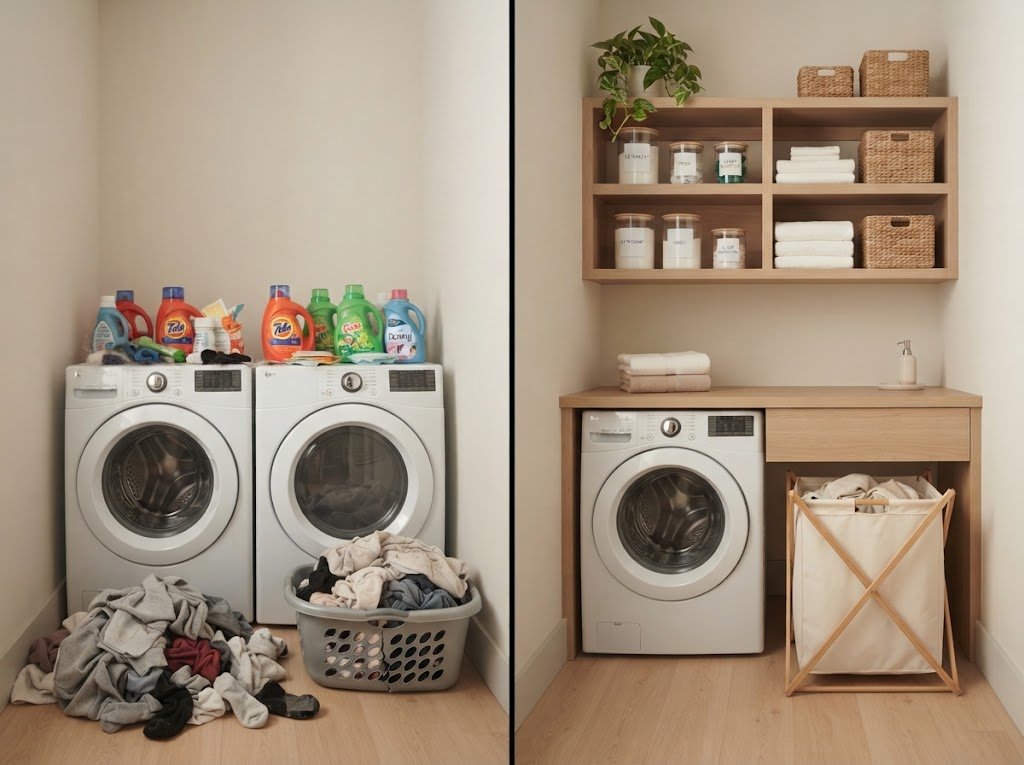
Every successful laundry room organization project begins with an honest purge. Storage only works when it holds things you actually use.
Clear everything off the shelves, the machines, and the floor. Then sort it into three groups:
- Keep: Supplies you use regularly.
- Relocate: Items that belong elsewhere, like cleaning gear or garage tools.
- Toss: Empty bottles, dried-out dryer sheets, single socks with no partner, and expired products.
Check the lint trap, wipe down the machines, and sweep behind them. You will be surprised how much bigger the room feels with a clean slate.
2. Create Zones for Washing, Drying, and Folding
Zoning is the foundation of laundry room organization. Instead of storing things wherever they fit, you place supplies where you use them.
Set up these four zones:
- Sorting zone: Hampers or a divided bin near the entrance.
- Washing zone: Detergent, stain remover, and fabric softener within arm’s reach of the washer.
- Drying zone: Dryer sheets, wool dryer balls, and a drying rack close to the dryer.
- Folding zone: A flat surface with space for baskets and hangers.
When each task has its own area, you move through the room in a straight line. That alone can shave real time off laundry day.
3. Use Vertical Space: Laundry Room Organization for Small Spaces
If your room is tight, look up. Walls are the most underused real estate in any laundry room.
Add Laundry Room Shelves Above the Machines
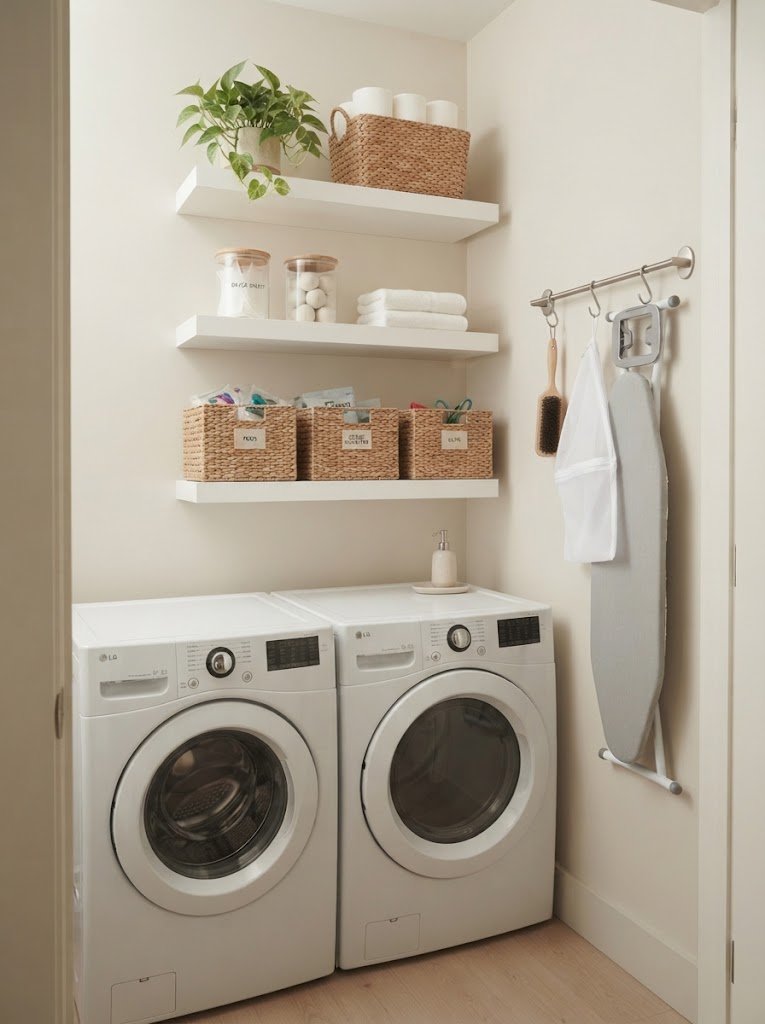
Install two or three shelves above your washer and dryer. Keep the lowest shelf for daily-use items. Put bulk detergent, extra towels, and seasonal items higher up.
Floating shelves work well in narrow spaces. Wire shelves are budget-friendly and keep air moving, which helps in humid basements.
Try Wall-Mounted Hooks and Rails
Add a rail or a row of hooks for lint brushes, ironing boards, mesh bags, and hanging garments. An over-the-door rack is a quick option for renters, since it needs no drilling.
4. Build a Simple Laundry Sorting System
A good sorting system keeps dirty clothes from piling up and makes loads faster to start.
Choose one of these approaches:
- Three-bin hamper: Separate whites, darks, and delicates.
- Rolling sorter: Slim and easy to move, ideal for tight spaces.
- Individual baskets per family member: Each person carries their own folded clothes back to their room.
Place the sorter near where clothes are dropped off, whether that is a mudroom, a hallway, or the laundry room door. The fewer steps between dirty and sorted, the better your system works.
5. Set Up a Folding Station
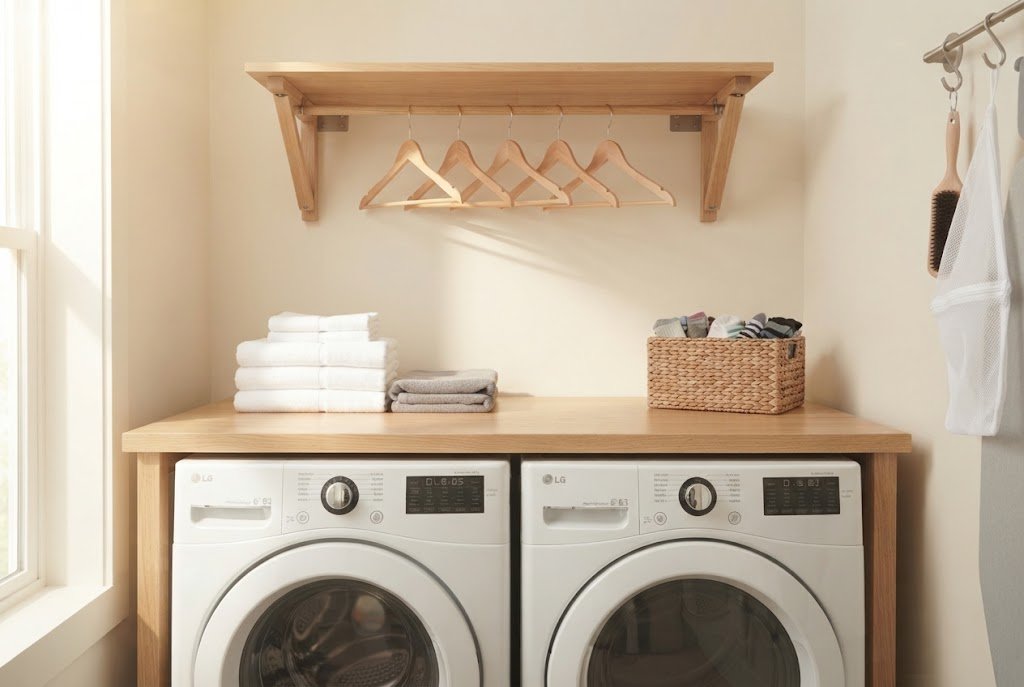
Folding on a bed or couch is a habit that wastes time and space. A dedicated folding station makes the task quicker and keeps clothes neat.
If you have a front-load washer and dryer, a countertop spanning both machines is the simplest fix. A butcher-block or laminate top works well and costs little.
No room for a counter? Try these options:
- A fold-down wall table that tucks away when not in use
- A rolling cart with a flat top
- A sturdy board that rests across the machines
Add a small basket for items that need repair and one for items that go to other rooms. Keeping those separate stops them from getting lost.
6. Choose Smart Storage for Laundry Room Organization
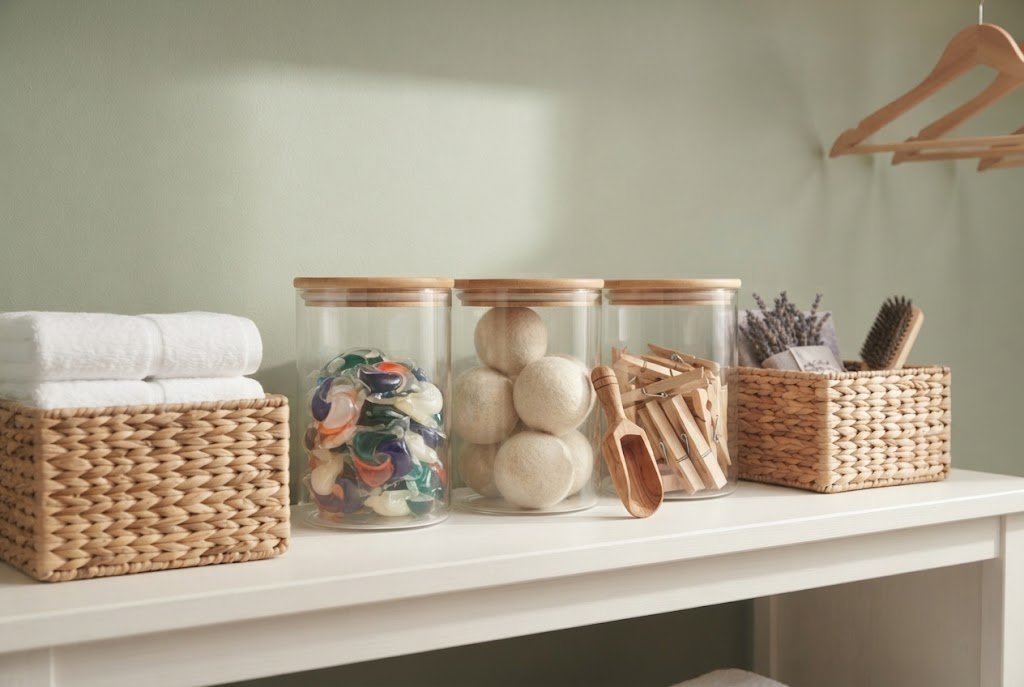
The right containers keep supplies tidy and easy to see. Skip bulky plastic jugs and decant products into uniform containers.
- Glass or clear jars for detergent pods, dryer balls, and stain sticks
- Pull-out baskets under shelves for small items
- Stackable bins for towels, rags, and linens
- A slim rolling cart that fits between machines for bottles and brushes
Clear containers also show you when you are running low, so you restock before you run out. A neat set of matching jars makes even a basic laundry room look intentional.
7. Add Air-Drying and Hanging Solutions
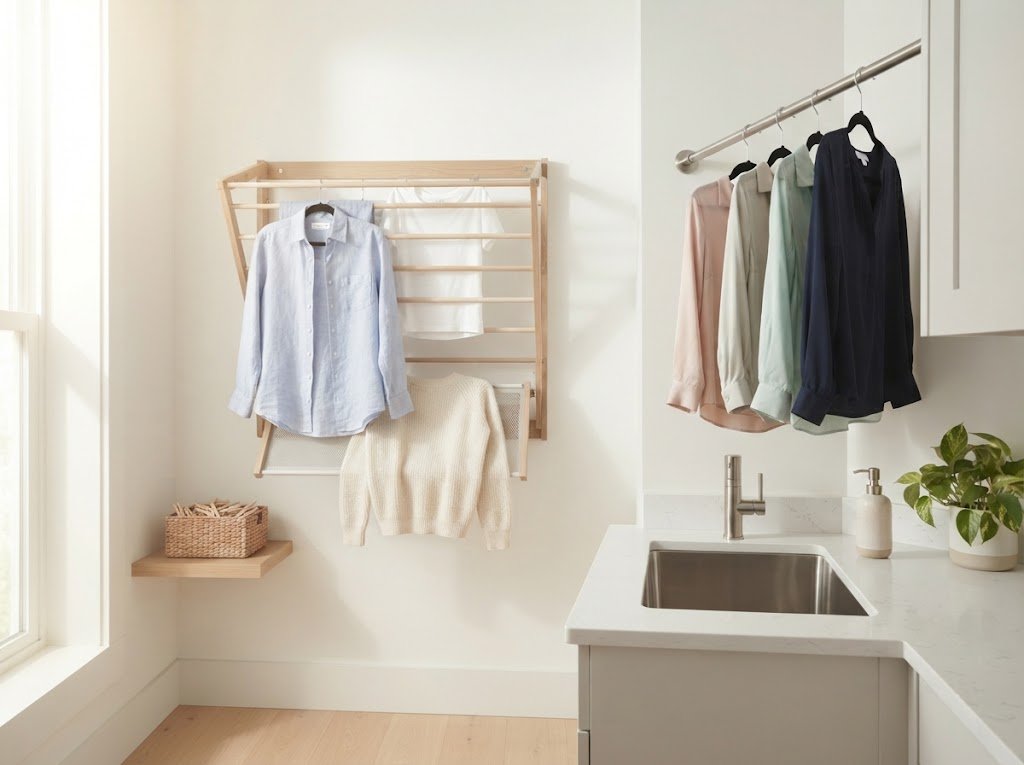
Some clothes should never go in the dryer. Delicates, activewear, and sweaters last longer when air-dried.
Smart options include:
- A wall-mounted folding drying rack that tucks flat when empty
- A ceiling-mounted rack for rooms with high ceilings
- A tension rod between cabinets or across a deep sink
- A retractable clothesline for small spaces
Leave a little breathing room around hanging items so air can circulate. This helps prevent mildew, especially in basements.
8. Label Everything
Labels sound simple, but they hold your whole system together. They tell everyone in the house where things go.
Use a label maker, chalkboard tags, or printable stickers. Label shelves, bins, jars, and baskets. If kids help with laundry, add small icons next to the words.
Consistent labels cut down on mix-ups and make it easy for guests or family members to put things back. They are one of the cheapest upgrades in laundry room organization, and one of the most effective.
9. Keep Your Laundry Room Organization Working With Easy Habits
Even the best setup falls apart without upkeep. The good news is that maintenance takes minutes.
Simple Habits That Stick
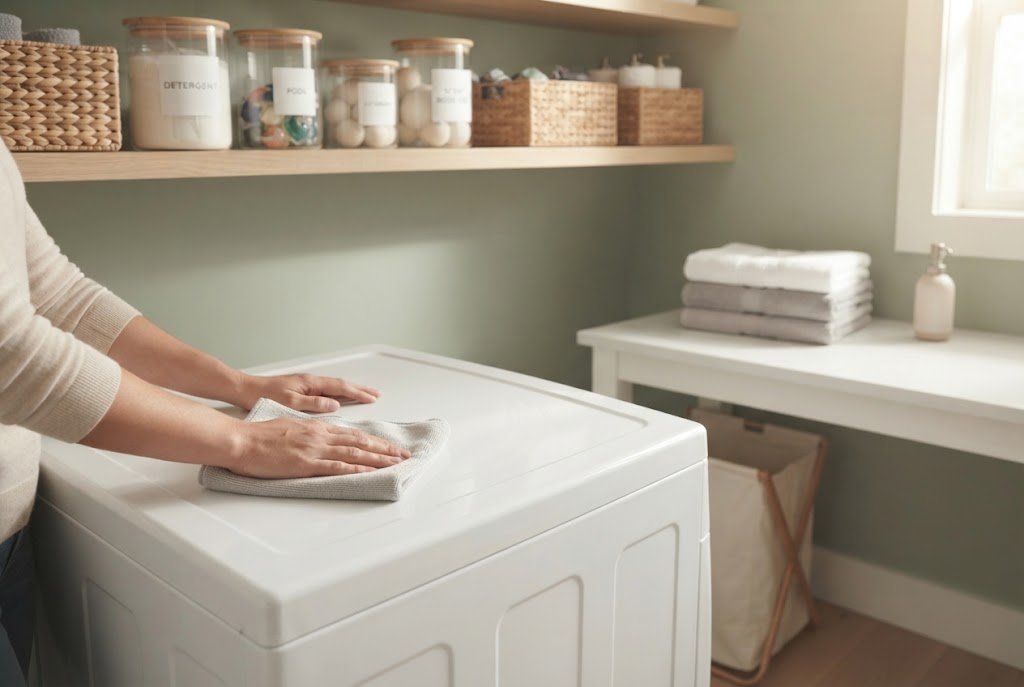
- Wipe the machines weekly. Dust and spilled detergent build up fast.
- Empty the lint trap every load. It improves drying and reduces fire risk.
- Restock on a set day. Check supplies once a week and write down what you need.
- Reset the room after every load. Put bottles back and clear the counter.
- Do a monthly check. Toss empty bottles and straighten shelves.
These small steps protect your effort and keep laundry room organization from slipping back into clutter.
Common Laundry Room Organization Mistakes to Avoid
Most people run into the same problems. Watch out for these:
- Buying storage first. Bins without a declutter only organize junk.
- Ignoring the layout. Place items where you use them, not where there happens to be room.
- Blocking airflow. Crowded shelves and stuffed cabinets trap moisture.
- Storing chemicals within kids’ reach. Keep detergents and cleaners on high shelves or in locked cabinets.
- Skipping a folding surface. Without one, clean clothes end up wrinkled and mixed up.
Conclusion
Smart laundry room organization is not about having a huge space or a big budget. It is about clear zones, vertical storage, and habits you can stick with.
Start with a quick declutter, add shelves and a folding surface, then label everything. Once your supplies have a home, laundry day gets faster and far less stressful.
Pick one hack from this list and do it today. Your laundry room organization will improve with each step, and your whole home will feel calmer for it.
FAQs About Laundry Room Organization
What is the best laundry room organization for small spaces?
Focus on vertical storage. Wall shelves above the machines, an over-the-door rack, and a slim rolling cart give you the most room without crowding the floor.
How do I organize a laundry room on a budget?
Start with dollar-store bins, wire shelves, and a label maker. Most budget upgrades cost under $50 and make a big difference.
Where should I keep laundry supplies?
Keep daily items like detergent and stain remover on shelves within reach of the washer. Store bulk products and extra linens on higher shelves.
How often should I clean and reset my laundry room?
Wipe machines weekly, empty the lint trap after each load, and do a quick monthly check to toss empties and restock.
Do I need a folding station?
It is not required, but it helps a lot. A flat surface speeds up folding and keeps clean clothes wrinkle-free.