
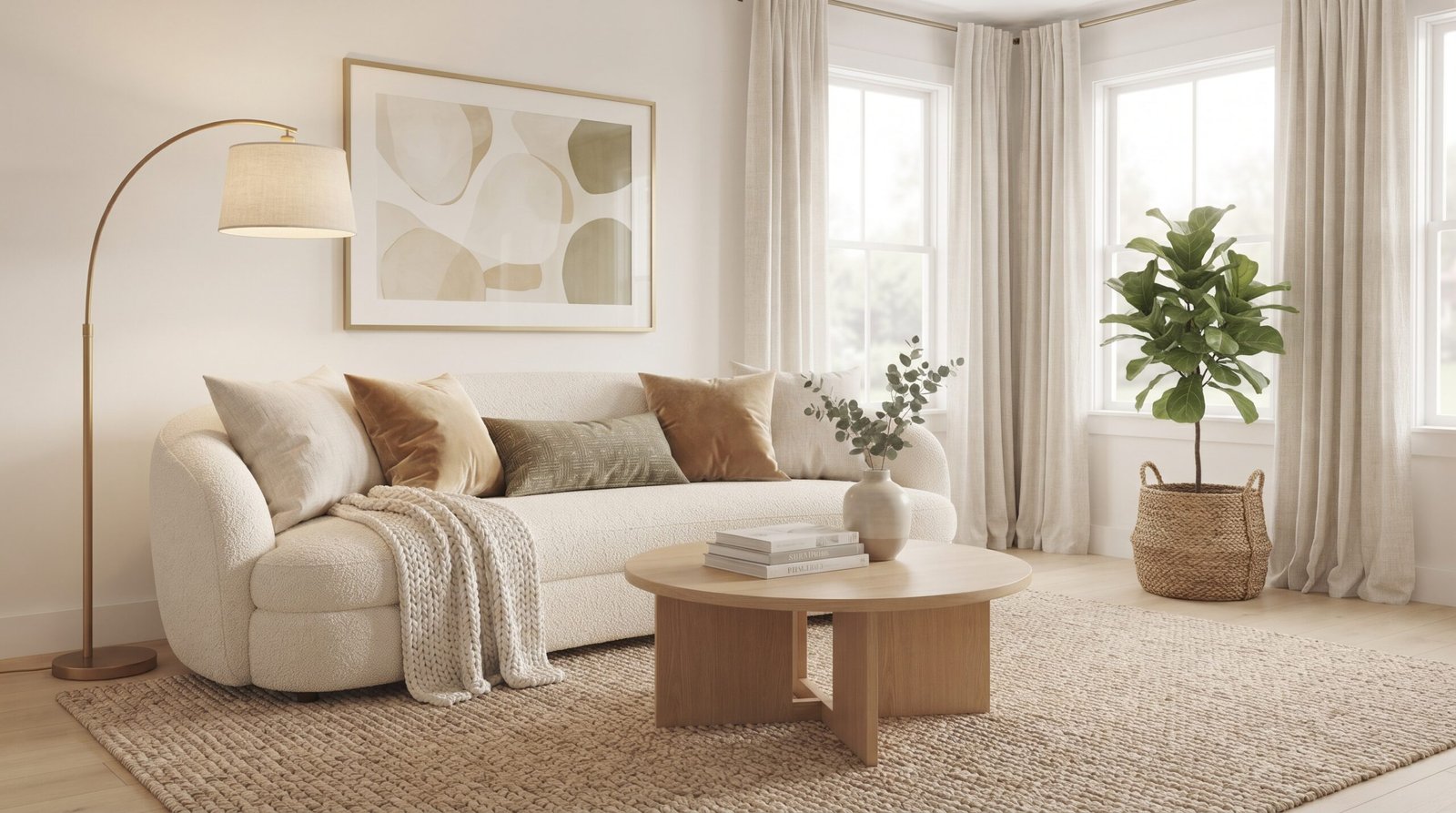
Room styling is the fastest way to make a house feel like a home, and you don’t need a designer or a big budget to do it.
Maybe you’ve bought the sofa, painted the walls, and the space still feels flat. That’s usually a styling problem, not a shopping problem.
In this guide, you’ll learn nine practical room styling tricks used by professional stylists. You’ll get exact measurements, US store ideas, and the mistakes to avoid.
Key Takeaways
- Room styling is about arrangement, balance, and layers, not buying more stuff.
- Plan the layout and function before you add decor.
- Use the 60-30-10 color rule for a cohesive look.
- Layer three types of lighting with warm 2700K bulbs.
- Group accessories in odd numbers and vary their heights.
- Edit regularly. Fewer, better pieces beat clutter every time.
What Is Room Styling and Why Does It Matter?
Room styling is the process of arranging furniture, color, lighting, textiles, and accessories so a space looks cohesive and works for daily life. Think of it as the final 20 percent that makes the first 80 percent shine.
Interior design handles the structure, such as floor plans, built-ins, and finishes. Styling is the layer on top that gives a room personality.
Good styling also changes how a space feels. A well-styled room can feel calmer, brighter, and more welcoming, even if you never move a wall.
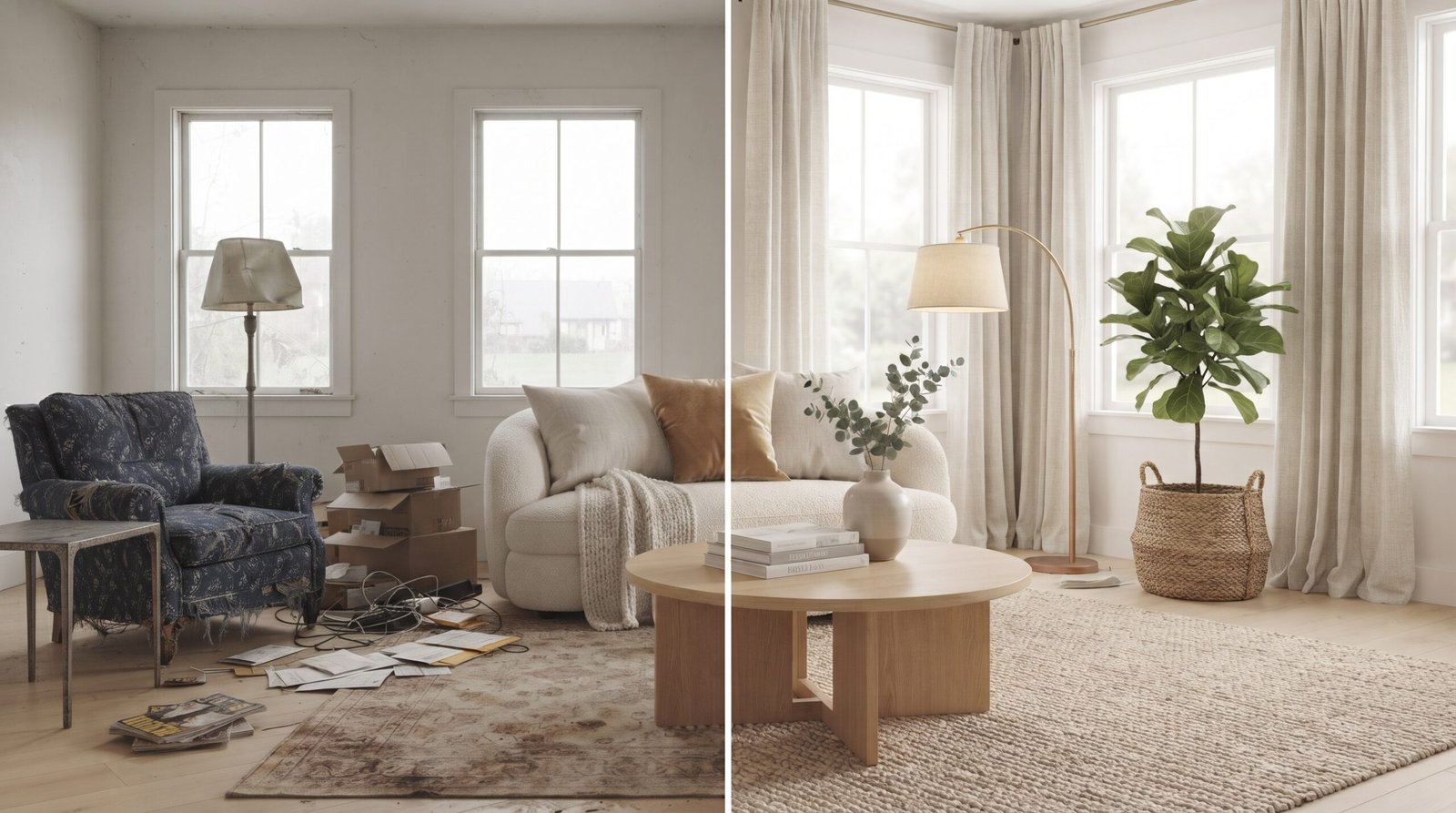
1. Start With Function Before Decor
Great room styling starts with how you actually live in the space. Ask yourself what you do there every day.
A living room might need a TV zone, a reading corner, and room for guests. A bedroom needs a calm sleeping area and easy storage.
Divide the room into zones, then style each one. This keeps decor from getting in the way of real life.
2. Build a Color Palette With the 60-30-10 Rule
Designers rely on a simple formula. Use one main color for 60 percent of the room, a secondary color for 30 percent, and an accent color for 10 percent.
For example, try warm white walls, a gray-beige sofa and curtains, and rust or navy accents. Repeat each color at least twice so the room feels connected.
If you’re unsure, pull your palette from a favorite piece of art or a rug.
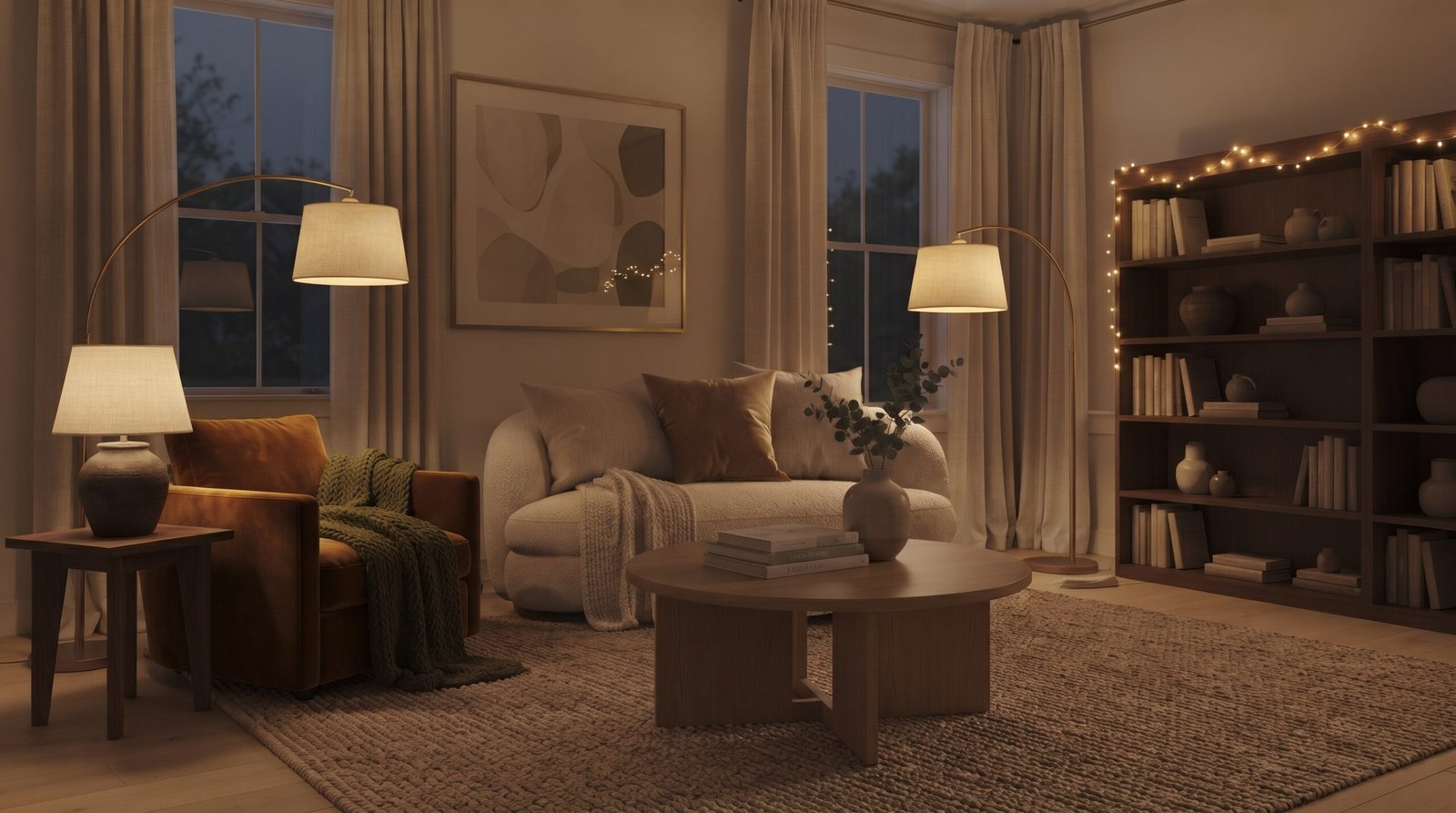
3. Layer Your Lighting
One overhead light makes a room look flat. Great lighting uses three layers:
- Ambient: ceiling fixtures or recessed lights
- Task: reading lamps and desk lamps
- Accent: string lights, picture lights, or candles
Choose bulbs rated 2700K to 3000K for a warm, cozy glow that suits most US homes. Cool white bulbs can make a living room feel like an office.
4. Get Your Furniture Layout and Scale Right
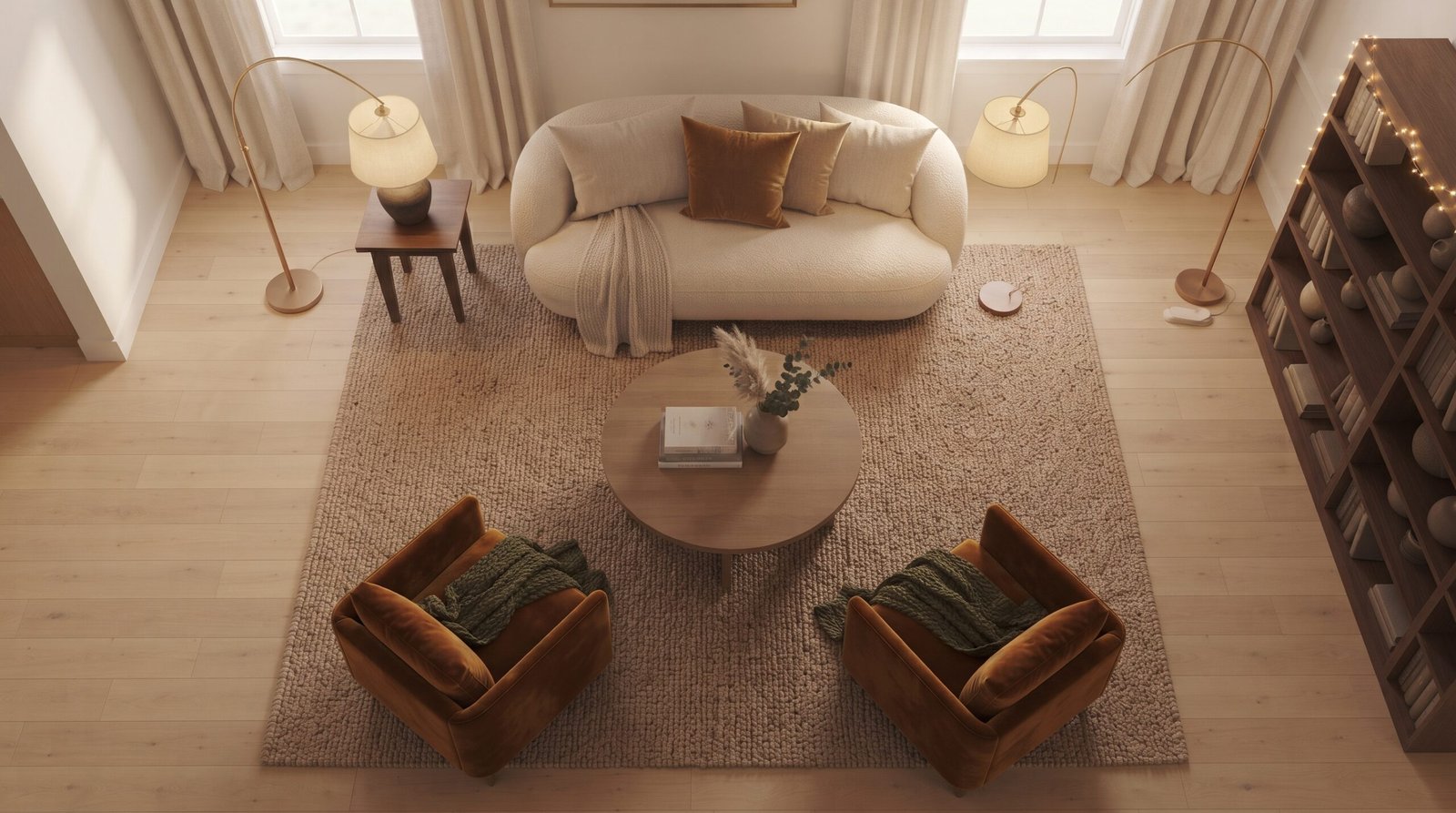
Pushing every piece against the wall is a common habit, but it makes a room feel stiff. Pull the sofa a few inches forward and create a conversation-friendly grouping.
Keep your coffee table 14 to 18 inches from the sofa. That’s close enough to reach and far enough to walk past.
Scale matters too. Oversized furniture crowds a small space, while tiny pieces look lost in a large one.
5. Anchor the Space With the Right Rug
A rug ties the whole room together. It defines the seating area and adds softness underfoot.
In most living rooms, an 8×10 rug works best, with at least the front legs of every sofa and chair resting on it. A rug that’s too small is one of the quickest ways to make a room look unfinished.
Neutral jute or wool rugs from Target, IKEA, or Rugs USA are easy, affordable starting points.
6. Style Surfaces With the Rule of Three
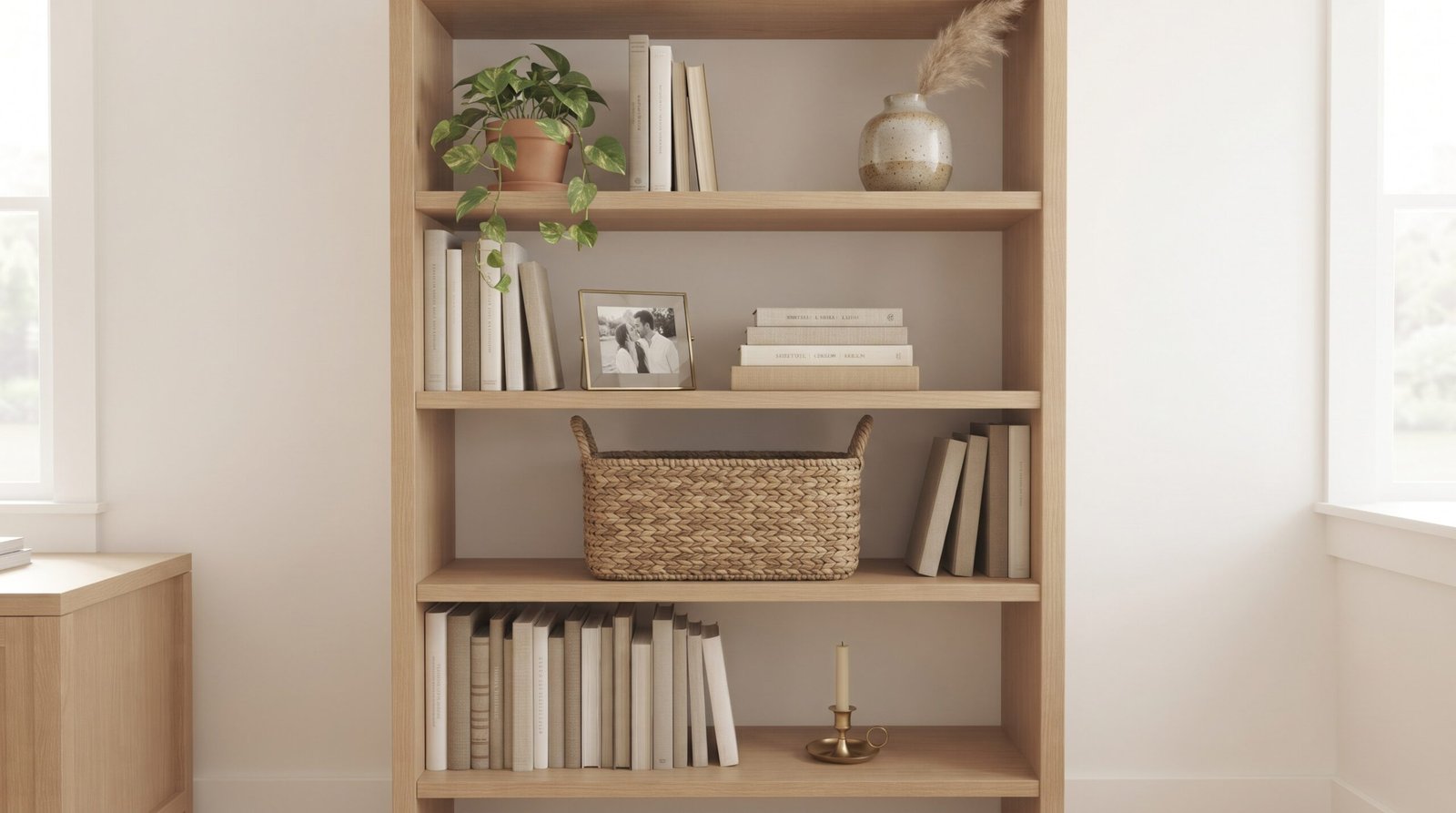
Coffee tables, shelves, and consoles look best when decor is grouped in odd numbers. This room styling trick works because uneven groups feel more natural and easier on the eye.
Try this formula on any surface:
- One tall item, like a lamp or vase
- One medium item, like a stack of books
- One small item, like a candle or bowl
Vary the heights, and leave some empty space. Negative space makes each item look intentional.
7. Mix Textures and Natural Materials
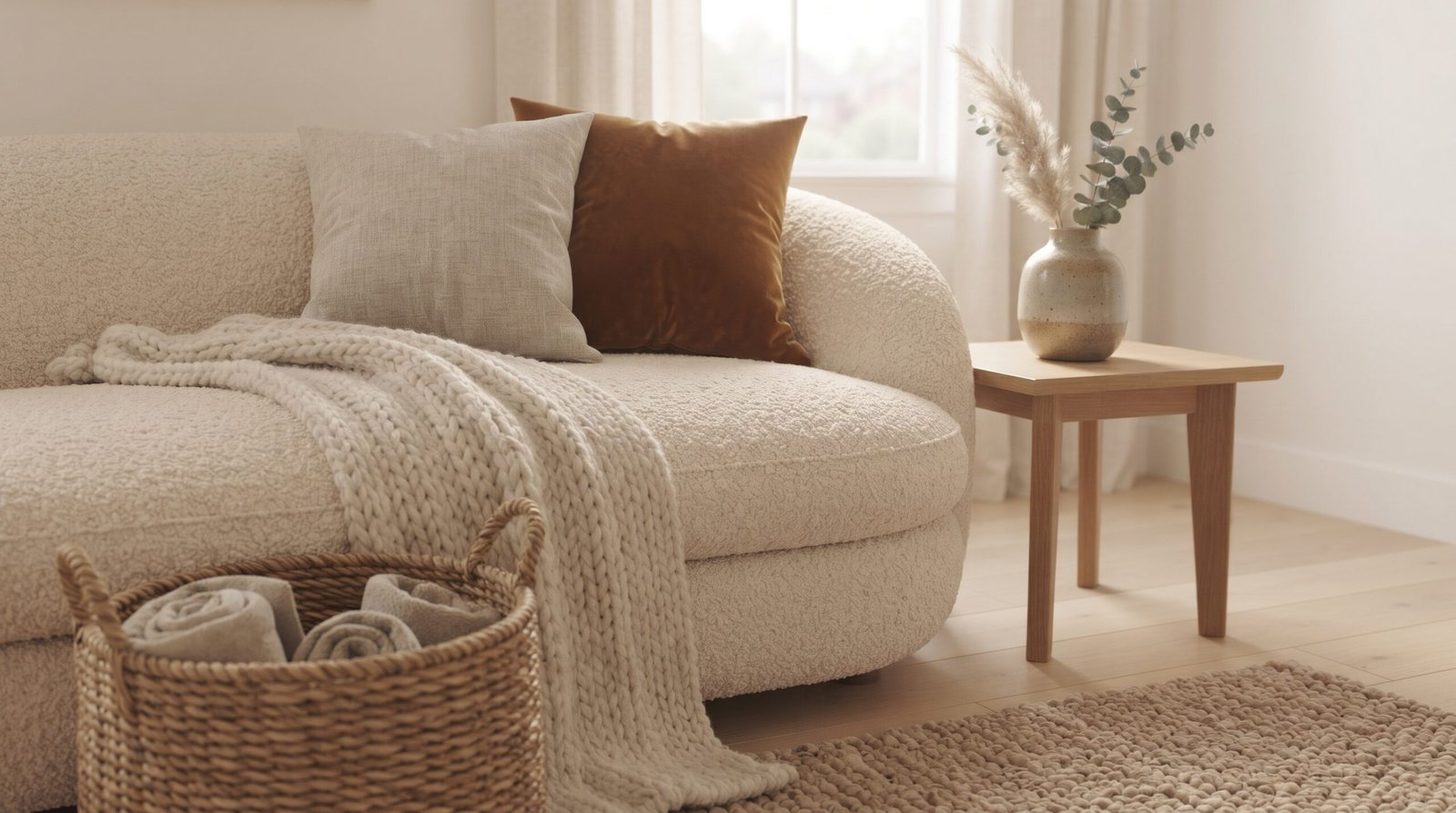
A room with one texture feels flat, even if the colors are perfect. Combine soft and hard materials, such as a linen sofa, a wood side table, a woven basket, and a velvet pillow.
Natural materials like wood, rattan, stone, and wool add warmth and a high-end look. They also pair well with almost any style, from modern farmhouse to coastal.
8. Hang Art and Mirrors at the Right Height
Art hung too high is one of the most common styling errors. The gallery standard is to place the center of the artwork about 57 inches from the floor.
When hanging art above a sofa, leave about 6 to 8 inches between the furniture and the frame. Choose a piece that’s roughly two-thirds the width of the sofa.
Mirrors are another smart tool. Place one across from a window to bounce light and make the room feel larger.
9. Edit, Then Add Personal Touches
Once everything is in place, step back and remove one or two items. Editing is what separates a styled room from a cluttered one.
Then add things that tell your story, like travel photos, a favorite book stack, or a handmade ceramic bowl. Finish with a plant, since greenery brings instant life to any corner.
Room Styling Mistakes to Avoid
The most common room styling mistake is buying matching sets. A coordinated look is nice, but a room with everything from one collection feels like a showroom.
Watch out for these as well:
- Rugs and curtains that are too small
- Art hung too high
- Too many tiny accessories
- Skipping lighting layers
- Ignoring the traffic flow of the room
Room Styling on a Budget
You don’t need to spend thousands to get a designer look. Start with the pieces that make the biggest difference, such as lighting, a rug, and pillow covers.
Where to Shop for Affordable Pieces
- Thrift stores: Goodwill and Salvation Army for brass, wood, and ceramics
- Home stores: HomeGoods, Target, IKEA, and At Home
- Online: Facebook Marketplace and Amazon for quick finds
- Paint: A fresh coat from Home Depot or Lowe’s is often the cheapest big upgrade
Room Styling for Small Spaces
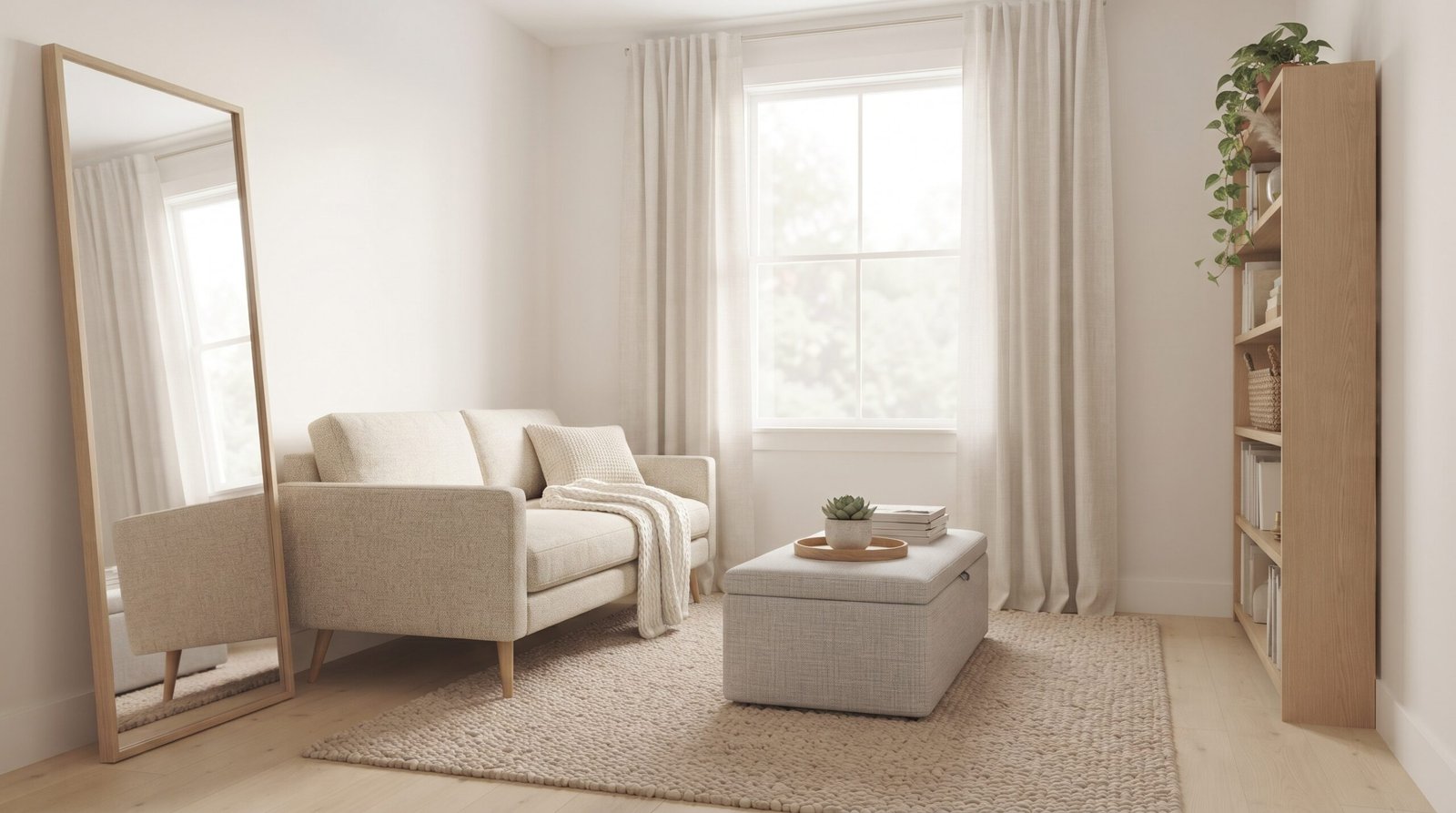
Small rooms need smart choices, not fewer ones. Choose furniture with exposed legs, use light colors, and hang curtains close to the ceiling to make walls look taller.
Add mirrors, use vertical shelving, and pick multi-purpose pieces like storage ottomans. These steps keep a small apartment feeling open and organized.
Conclusion
Room styling doesn’t require a big budget or a design degree. It requires a plan, a few simple rules, and the courage to edit.
Start with function, choose a tight color palette, layer your lighting, and anchor the space with the right rug. Then finish with textures, art, and personal touches.
Pick two or three of these room styling tips this weekend and notice the difference. Small changes add up fast.
[Internal Link: Insert relevant internal URL here with anchor text, e.g., “more home decor ideas on a budget”]
FAQs About Room Styling
How do I start room styling if I’m a beginner?
Begin with a clear purpose for the room, then choose a three-color palette. Add lighting and a rug before smaller accessories.
What is the easiest room styling tip that makes a big difference?
Swap your light bulbs for warm 2700K ones and add a properly sized rug. These two changes instantly make a room feel finished.
How much does room styling cost?
A DIY refresh can cost $100 to $500 depending on what you buy. Professional stylists in the US typically charge by the hour or by the room.
Can I do room styling myself without a designer?
Yes. Follow basic rules like 60-30-10 color, the rule of three, and proper art height, and you can get great results on your own.